Interview 099 • Jul 26th 2026
- Interview by Lou Noble, Portraits of Olivia Bee by Joe Haeberle
About Olivia Bee 2026
Olivia Bee is a photographer and director. She is intrigued by the magic of everyday life, a human’s inherent connection with land, the duality of love, and how the beauty of memories (real or imagined) touches us.
She became the youngest artist to have a book published with Aperture Foundation with the release of her monograph “Kids In Love” at 22 years old in 2016. The work was shown as a solo show at Aperture Foundation as well as agnès b in New York City. She has been included in group exhibitions with Danziger Gallery, agnès b, Aperture Foundation, Weinstein Gallery, Bernal Espacio Galeria, and with Van Cleef & Arpels in Kyoto and Paris. Her solo show “In The Secret Distance” showed at Headstone Gallery at Upstate Art Weekend in 2025, as well as online at Danziger Gallery.
Olivia has given two Tedx talks and has spoken at conferences around the world. She has been listed in the sought after directories of PDN 30 Under 30, and Forbes 30 Under 30.
Olivia lives in Southwestern Oregon with her husband, Joe, and their daughter, Mary. They run Y Knot Farm + Ranch in Oregon’s Umpqua Valley, with a focus on regenerative, pasture raised meats. The dance between the rootedness of farm life, and the sparkle of international travel, punctuated with art making, is what makes Olivia tick.
Links
Foreword
What a joy, to watch a photographer grow and evolve. We've been following the work of Olivia Bee since she started on Flickr. We first interviewed her in 2014, when she was based in NY, then again in 2018 when she'd moved to Los Angeles, and had planned to make it a more regular occurrence...but we all know how 2022 went...
Took awhile, but we finally got to sit down with Olivia, now in Oregon, in another phase of work and life. Still creating, still growing, still very much herself.
----
This interview has been edited for clarity and content.
Interview
We’ll jump right in. What’s changed since we last interviewed you, eight years ago? Easy one.
So much! I live in rural america now, I run a farm with my husband. I’m married. I have a child.
I feel like I grew up in the city not knowing that some things were an option. I never knew that you could live in rural America or that you could have a horse. I just thought that was something you were born into and you couldn’t choose that. But, you know, there were always inklings of this kind of stuff when I was a little kid. We were always gardening and my parents had a big yard. We were always outside and I was always really interested in, say, the tomato that came from the garden. It’s all been a road map back to myself. I feel like that’s especially evident when you have a kid, I’m remembering all these things that got me excited as a kid and seeing myself through new eyes. Coming back to myself in ways that maybe I didn’t expect but feel very natural.
Yeah, most importantly though, how goes the work? Babies are nice and all, but what about photography!
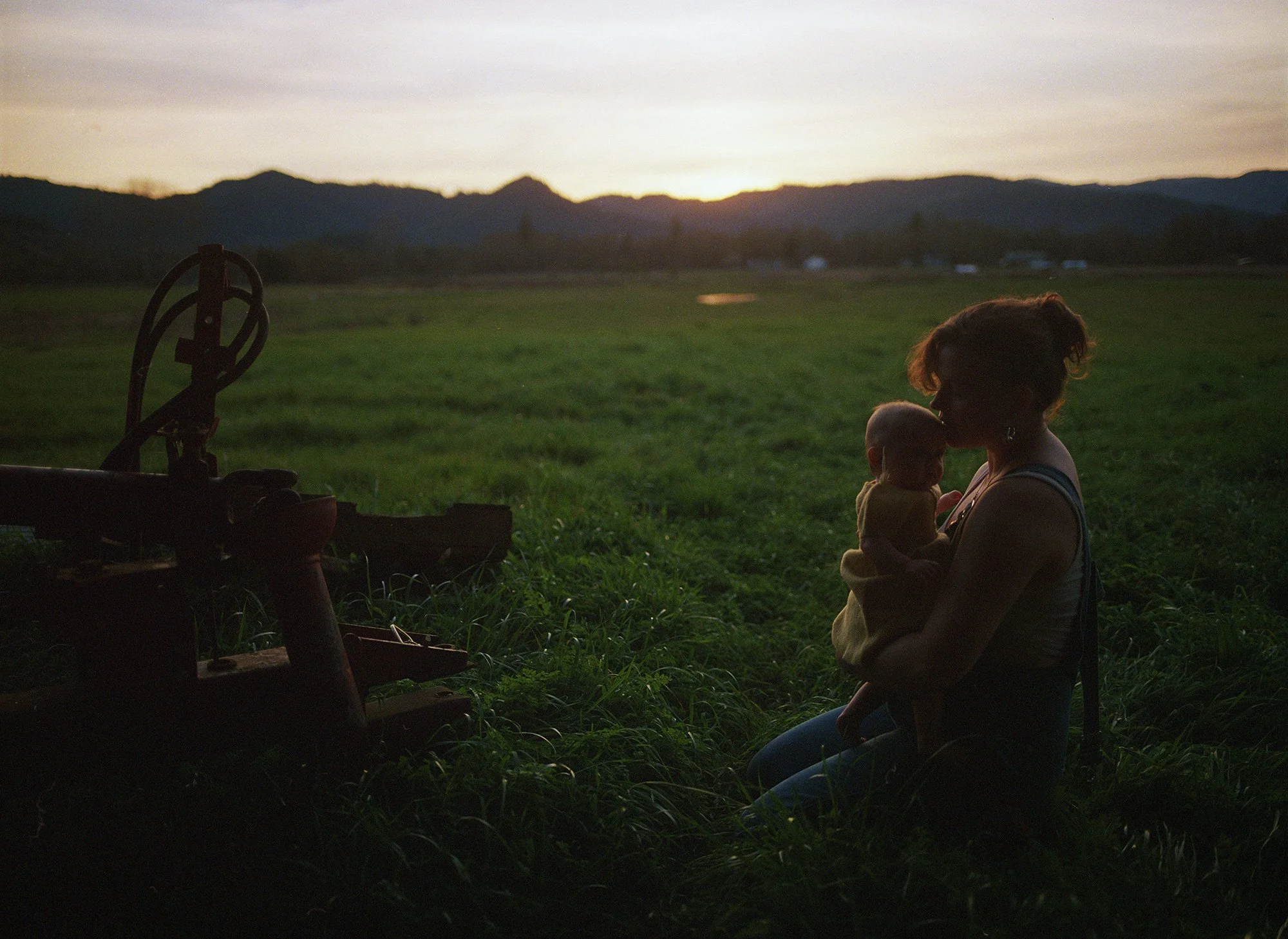
It’s good! I just want to make the most magical childhood for my daughter. And so that ends up being in pictures because I’m always photographing what I’m going through in my life and what’s happening, whether that’s an external circumstance or observation or an internal monologue or fantasy. I’ve been photographing our life on the farm, but with this new magical inclination. I’m being drawn to making costumes and making little houses out of papier-mâché, growing just like a shit ton of flowers so that my daughter can be in a field of flowers. My life comes first, my photographs come second, but my photographs are always evidence of that life, or proof. It comes from life first and it’s always been that way. So it’s good. I’m shooting more commercial work, which is really fun. I feel like I need it. It’s generative for me to go out and be creative for other people and get paid and go on a trip. To have to deal with all these challenges that come with shooting commercially and then bring that hustle back to my home and seeing things with a new set of eyes because I was just in a different setting. They inform each other.
How does the professional field feel for you? The last few years have been very tumultuous for people in photography.
There’s a lot to be afraid of. And I try not to go there, because then I can’t get out. With AI, you know, some people’s careers are just over, if you don’t pivot, it’s going to be gone. There’s this push, the world’s going in two different directions in terms of visuals, there’s the super-obvious, “perfect AI can do this, why wouldn’t we have AI do this?” Then there’s this whole real attraction to human imperfection. And I’ve always been attracted to human imperfection and how that makes things beautiful. So I’m diving into that even more. Because I don’t think that can be replaced with AI, I think AI is does a great job at, unfortunately, things like e-commerce, and which I think people should be still shooting as a job, I don’t think we need to save j crew, like, tons of money, and the thing I don’t get about AI is, do you not realize that if all the jobs of the people who buy your things are gone, you won’t be able to sell your shit. You need all those blue collar white collar people to buy your dumb t shirts.
It’s part of the ecosystem.
Yeah, exactly. They’re not thinking about that. They’re thinking about cutting their numbers, not like, where’s our consumer going to be? And you see people struggling to, I mean, obviously, gas right now. Just doing life is a lot more expensive than it used to be. But people seem to be paid less, across the board, not just in the photography industry, I think in general, no raises yet your taxes go up, gas is more expensive, groceries
are more, just everything’s more expensive. All that to say, I’m choosing to be optimistic. And that people will always want a human touch. And I feel like there’s always going to be doom and gloom. It’s pretty tense.
In our industry, you can always be like, “well, it wasn’t like the 80s. Well, it wasn’t like the early 2000s.” And so I try to think in terms of, okay, what in 20 years are people going to be like, “God, I wish I could go back to that. It wasn’t like it was in 2026.” Which sounds crazy to say out loud, but what are those avenues to develop in and try to pivot under? There’s still ad work, but it’s definitely different. I’m trying to go for things that I maybe I didn’t shoot when I was younger. I think it’s either adapt or migrate or die. So it’s hard staying where you are and wishing things were different, it’s hard changing and figuring out how to be present and current…you choose your hard.
Part of that too, is surrounding myself with positive people. People who recognize the difficulties in the industry, but want to keep going and want to
find the good in it. People are always going to need a human touch, people always going to want human stories, or at least the world I want to live in and the world I want for my daughter. And even if that world is maybe less than the whole world, I think it’s still going to be there.
Do you feel like you’ve got a balance right now between like your art and your life?
I feel like I have a balance between my art and my life but it’s an ever-evolving dance, especially with the seasonality of farm work. Admittedly, I’m not doing as much of the manual labor as I used to because I’m the primary caregiver and joe has to be on the tractor a lot, but I feel so lucky for Mary, too, because we’re both able to be home. She gets to be with us 24-7.
When you’re a mom you’ve become a little more efficient with your time or maybe inefficient in other ways, but like, “okay I have 15 minutes while she’s playing with blocks or asleep or is really into this book, I better make the most of this 15 minutes because I’m gonna want to be with her
after when she’s not focused on something else or if she’s not sleeping.” It’s a challenge. Commercial stuff is not usually on schedule. My schedule is based on her schedule and then hopefully other things fit into it or I have to figure it out. I’d like to be working more, I would love to be doing a shoot a month, I think i’m headed back to that. Everything’s how it’s supposed to be. Also, it’s so beautiful here right now, it’s like this every day for months so it’s not a bad time to be home…but I have a big job in two weeks. So I’m excited for that.
I used to be like, “I wish I could only do my personal work and not do any commercial work.” And I did that. And it really sucks to be a starving artist. It sucks. I wasn’t creative, because I was in survival mode, and I know a lot of people can relate to that. I was literally just thinking, “how are we going to make these next bill payments?” I’m not thinking, “oh, it’d be great if I turned into a butterfly today.” It gave me a lot of perspective, because when I started taking pictures, I was still a dependent of my parents, and I was working that way. I got to really explore what I wanted to say and how I wanted to shoot without the pressure of making money.
Why is it that you think your career has survived when other people seem to be floundering?
I don’t think it came without floundering, I’ve definitely had moments of floundering or thinking, “is this floundering?” or, “floundering is coming.” I’m definitely lucky, in a way. I’m always trying to…yeah, I’ll take a million pictures of myself in a field at sunset, but I am trying to do new things, too.
I don’t try to follow trends. I try to figure out what’s next for me and what’s interesting to me and hopefully that changes. I realized after Kids in Love and after I moved to rural America, “okay, I can’t be hired for kids having fun out in the world forever, because I’m not going to be a kid out in the world having fun forever.” I look at Rihanna, she’s evolved so many times. And she does stuff on her own timeline. I’m always thinking, “okay, what would Rihanna do? She’d probably do something different. She’d probably try something new, but still be herself.” And she’s so unapologetically herself, even when it’s new or different.
Are you still using large format right now?
Not really. It’s too expensive. I’m sure I will return to it. I was also craving something between large format and 35mm, so I’ve been shooting mostly medium format and trying to marry those two worlds. I wanted a quicker way of image-making. I had a self-timer I’d had made by this robotics company to take pictures with my large format…but they didn’t last that long. So then I was always asking Joe, “can you please help me take a picture??” He’s always willing, of course. But I got into taking self-portraits because of the autonomy. So self-timer is my best friend, mainly with a Mamiya, most of the time. I mean, I still sprinkle in 35mm, even if it’s just disposable cameras. I always have one in my bag, but mostly Mamiya.
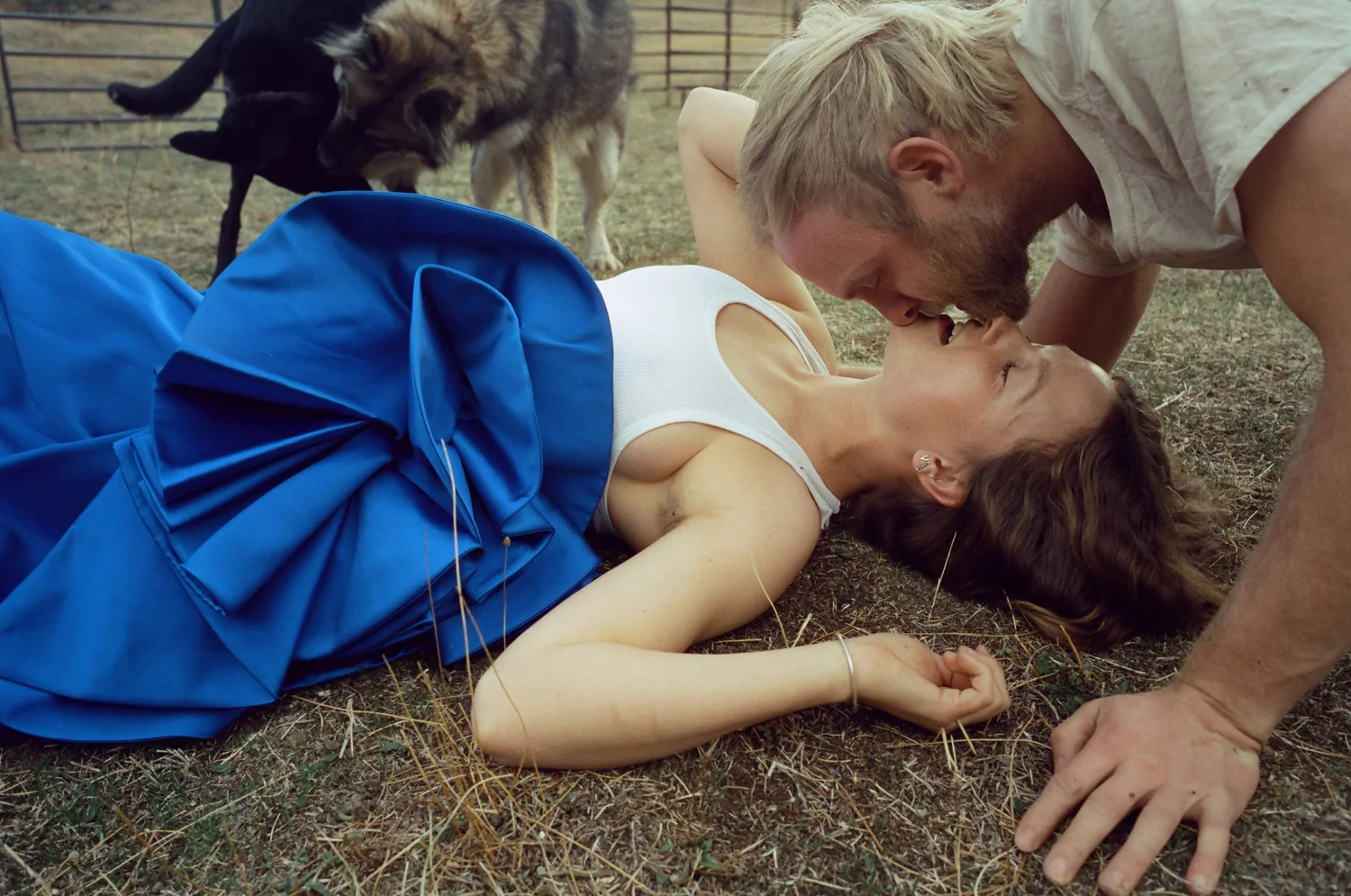
How is it being married to another photographer?
Oh, it’s cool. Joe is the kind of artist that won’t make something for a year and then he’ll go and make the most beautiful picture and I’m
almost like, “fuck you. ” I have to be fully available and taking pictures all the time to keep that muscle alive and well and I feel like he can just turn it on and be like, “ah, I’m back.” But it’s great. We have a lot to talk about, photo-wise. We have the same interests, agriculture and photography,
but I would say he’s more interested in agriculture than I am, and I’m more interested in photography than he is, it’s a nice balance.
I love that he loves image-making and sometimes he makes these pictures that make me think, “oh my god, how did you even get that?” And he gets it so fast. I’ve been told I’m a pretty fast shooter by many people and I’m like, “you have not seen my husband.” The gut feeling, he is so good at just trusting that and coming out of this quiet time I had in my working life is a return to trusting in that gut feeling. He reminds me a lot that that’s my most important asset.
Have your inspirations changed over the past few years?
Yeah, I would say the list has gotten shorter. I’m looking to the ground a lot more because my kid’s down there. And I’m noticing bugs. And really, I have a macro lens now that I love. And I was like, “why did I never have a macro lens? This is so fun, seeing the world so small.” Sometimes I just use it for a portrait, but you can see the pores on the skin and I just…I used to be really interested in the landscape of the body and sensuality. And now I’m really interested in the landscape of the close-up, the close-up of my daughter’s eyes or my hair on her face or
how the water drips off of her hair, small things like that.

Details.
Yeah, small details become the landscape. I was just so interested in the body in a landscape and the body becoming the landscape. And yeah, now it’s the details. It’s kind of the opposite of what Sally Mann talks about when her work, when she was shooting immediate family, and then she went into her landscape stuff, her children were still in the pictures, and then she kept zooming out. So it was way more the landscape than the pictures and than the children and the children disappeared all together, but I feel it’s the opposite for me. Maybe that’s because I became a mother much further into my photographic journey than she did.
I also I had a very close friend of mine die, a year and a half ago now. And she respected all living beings down to like, the dung beetle, you know, and so I’ve been more appreciative of that, while we while she was here with us, but also after she died.
Is there work you’re excited to make in the future?
Oh, I mean always. I’m making a film. So that is very exciting. It might take a minute, but I’m making a film. A full length.

You did a short about dog sled racing.
Yeah, I did a short about about mushing, a short doc. I did my narrative short about the dancer, I’ve done plenty of music videos and things but definitely always craved doing something longer, so I’m excited about that.
Is this one you’ve written yourself as well?
Currently writing, yeah. It’s always about personal experiences, but made a little bit more palatable.
How often are you taking pictures right now?
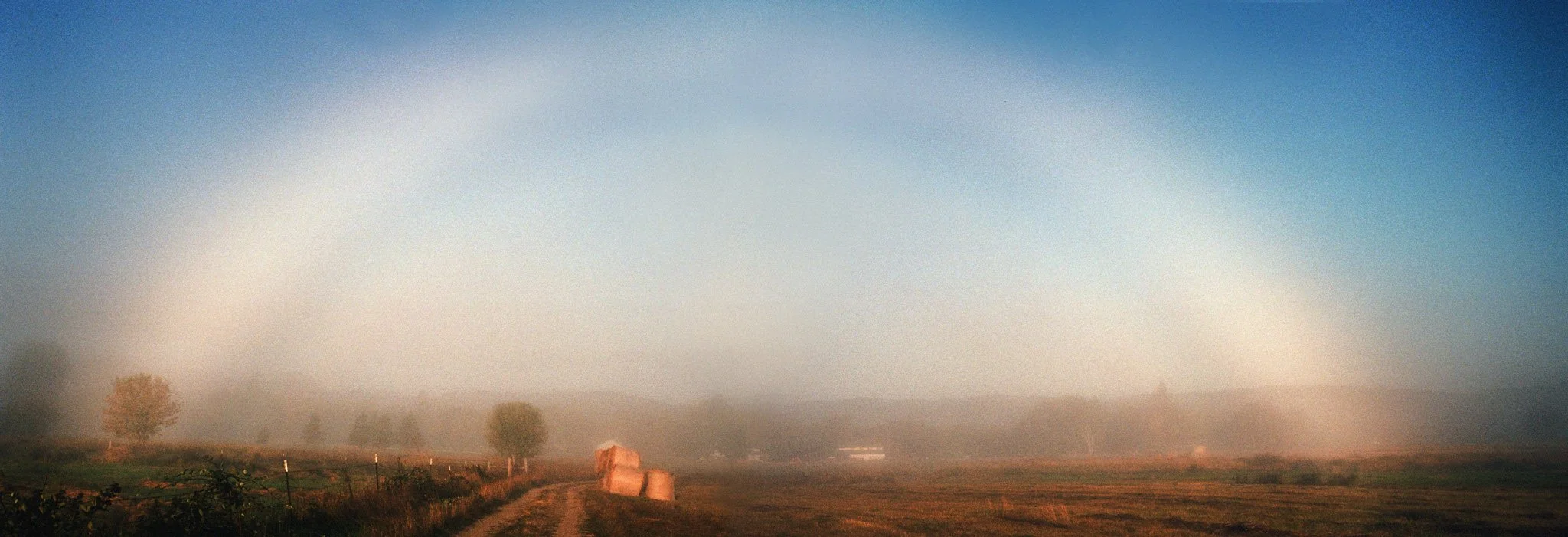
I take a picture every day, sometimes that’s on my phone, and maybe it’s not something I’m going to put in a gallery, but it’s still using my visual brain. I go out to take pictures once a week, maybe twice a week. It depends on the weather, I get really inspired when it’s so lush and green outside and there’s rainbows and sometimes it’s raining and sometimes sunny and there’s flowers. You can be outside, not wearing a coat and you can sit on the ground. So, I’ll probably be taking more pictures now and then sometimes in the winter, less.
Have you considered doing other shows, other books?
For sure. I had a show last summer and books are how I think about pictures, it’s always a chapter of a book, but it’s such a thing to get them published. I think a book is warranted, but there’s nothing in the works right now. I’m always shooting for the next show and the next book so there there will be one.
Do you see the chapters of your life clearly?
Absolutely. In the pictures and the way I was taking pictures, oh yeah.
How do you articulate those chapters to yourself?
In a chapter of your life, what are the things you’re returning to? There are usually common themes, like, birds were really speaking to me then and I always wore this dress or whatever. It can seem like a superficial thing, but I think about it like, okay, if there’s a character in a movie that’s always wearing a red dress and suddenly she’s wearing a green dress, you think, okay, there’s something happening there and I feel like it’s the same in my life. It can come through clothing, it can come through a certain camera and how that makes you look at things a little differently. I get married to a camera for five years and then I move on. I don’t have to articulate it visually, it just happens, it’s not something I have to think about too hard. There are the common themes that I always come back to, you know, the body and the landscape, connection between people, pink, eggs, life and death, etc.
When I think of your career, the chapters of your work, it feels very city-based for me, there’s the early Portland period, then there’s the New York period, then there’s the LA period and there’s the return to Oregon period.
Totally, I think that’s accurate. The pictures that don’t resonate with me anymore are, yeah, the LA and New York pictures. I just like the pictures I’ve taken in Oregon. I like some of them, and I like certain projects I did. I think it’s more…maybe I just didn’t like my life as much. I liked the projects I
would go shoot and seek out, but when I was documenting my everyday life, which is such a life force for me and my creativity. I mean, I had a nice life. I had a great life, but it wasn’t deeply inspiring to me. The professional work was inspiring.
There’s a reason you came back to Oregon. It was a journey for you, where you had to have these other adventures to come back to Oregon.
Absolutely. I think about it in terms of place as well, that’s an inherent change of scenery, and an indicator that something has changed because it’s very obvious something has changed!
And there there is no anticipating what the next chapter is going to be?
No, I can imagine, there’ll be more kids, we’ll definitely have one more. We might not stay in Oregon forever, we want to figure that out before Mary is school age.
Where would you want to go?
Probably Montana or Wyoming and have a more Western way of life. We don’t want to be chicken farming forever. Joe is a horse boy, he’s ridden horses his whole life. He’s a champion in endurance riding. We have his horse, we have my horse, but he doesn’t want to go trail ride anymore and we want to be working with animals.
What we have here is wonderful, there are amazing people, it’s close to a lot of amenities. I’m not ready to leave, yet, but I imagine a world where we’re more in the wild. We want to be ranching rather than farming. Yeah, we’ve got a little time. But it goes by really quick, really quick.
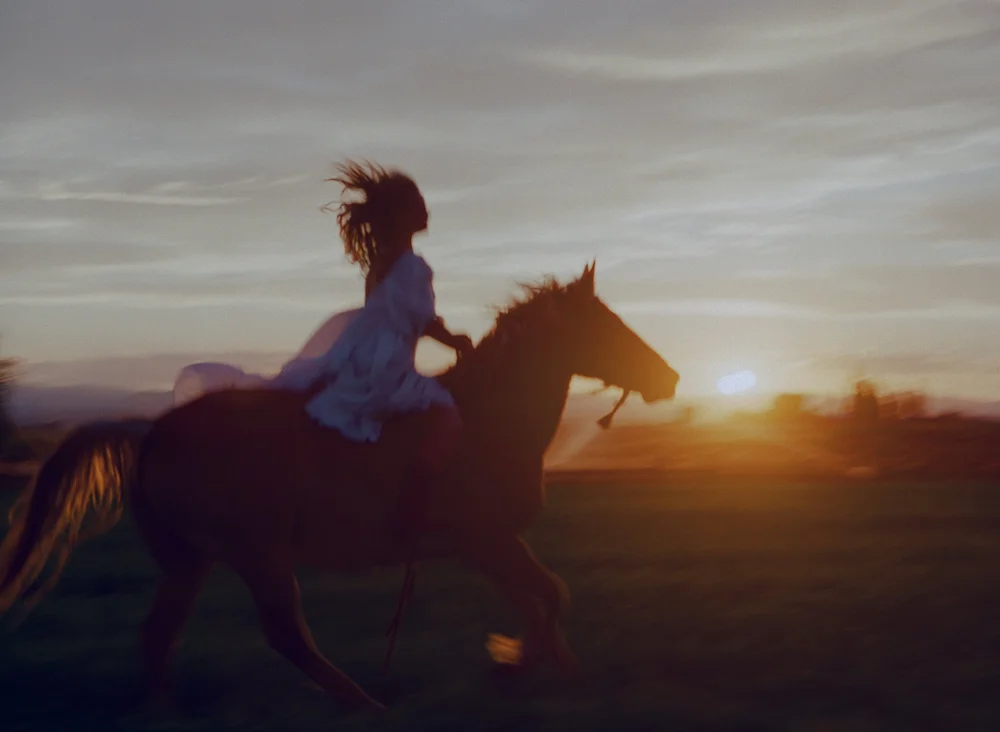
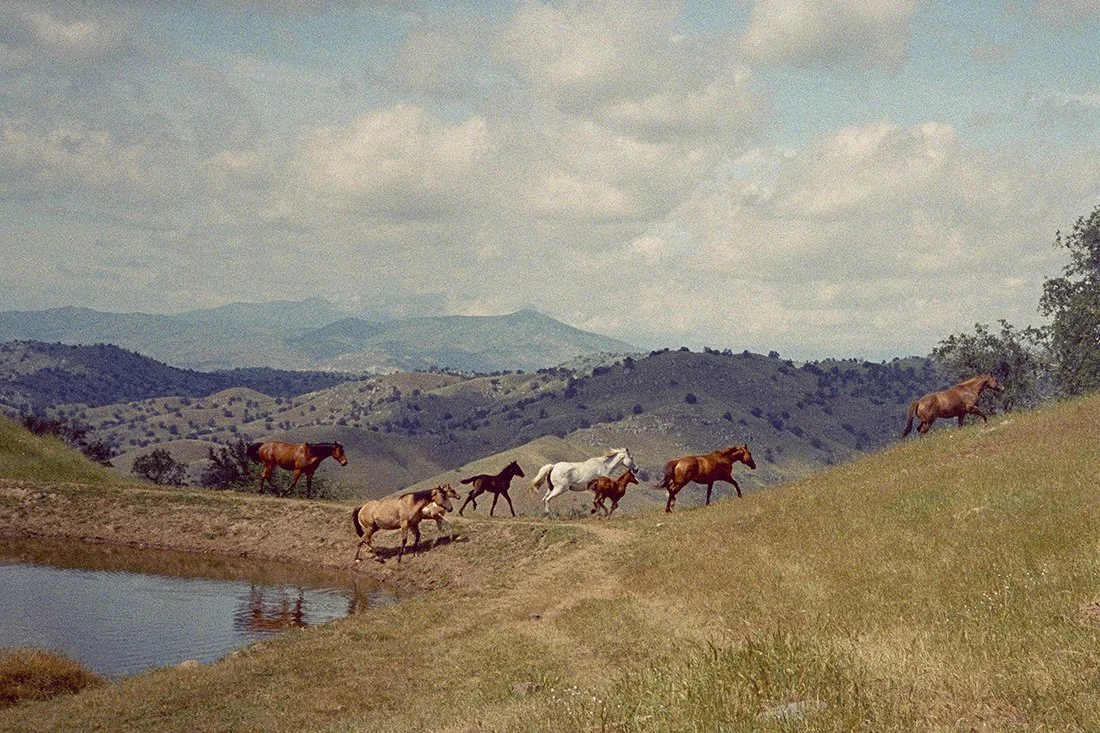
More horse photos is what you really want.
Yeah! More horse photos. I always wanted to have an artist retreat when I lived in Eastern Oregon. That was kind of the plan, but then COVID hit and the place wasn’t really big enough for that. Maybe I could host a workshop or two, or a dinner, but we really want to have a dedicated place for artist retreats and also maybe a ranching school, because agriculture is dying in the US. It’s getting so much worse and young people can’t afford it, including us. You know, we have good other jobs and it’s so expensive.
So thinking about something like that in the long term and also, I want a studio that’s separate from the house, we’re just thinking about things that would make a dream thing. And then also maybe some multi-generational living, probably closer to his family, because his parents are both retired and more available for helping with kids.
It seems like you have a lot of ideas that seem possible to you, as grim as things can be.
You have to think it’s possible or it won’t happen. Joe is a big dreamer and I’m a big dreamer who’s also a realist. We’ve had to meet each other in the middle, like, “okay, let’s dream, I can dream bigger but it also needs to be able to happen.” We’re crazy like that and also a good team, but I don’t think other people understand our decision-making, which is fine, only we need to understand our decision-making.
It’s all seemed to really come together.
It always does, maybe it takes a second, but it always does.
Yeah, you’ve always seemed both aspirational and grounded.
That’s the balance of living on a farm and working with my hands and also going to LA to go shoot Kesha or whatever it is. I need that sparkle, but also that rootedness and, honestly, that shit. I deal with poop every day. I need that, but also the sparkly diamond fantasy of whatever it is and where those things come to me. I feel so lucky to be able to live in that dance, but also, I worked hard to cultivate that dance and figure out how we were going to dance.
Where do you think that combination came from?
That’s a great question.
Thank you.
Ha! I feel like you just go through life and try stuff and figure out what works for you the best. Maybe that was pretty evident when I was living in New York. I moved to LA from New York because I never saw the sky in New York and I have to see the sky…but that party I was at last night was really cool. I loved both but I didn’t know how to have both. How to have both to me was working in New York and then going to Oregon for two weeks in the summer and going camping…but also going to house parties and farms. Now I live those principles instead of borrowing from those principles. Now that’s what my life is built around.
And do you think that your tendency to go for the things you want allowed you to get both of those things?
Of course. Yeah, of course. And I want Mary to know that she can have that too. Whatever she wants. I want her to figure out how to… in some dark periods in the last year and a half I’ve been like, “I have to figure this out because I need my daughter to be proud of me and to know that she can do that too.” I just want her to be able to flourish. I don’t want her to just survive. I want her to thrive. And how is she going to get there? I need
to show her that it’s possible.