Interview 100 • Aug 30th 2026
- Interview by Nathan Leigh Taylor,
- Portraits of Camille Farrah Lenain by Brandon Holland
About Camille Farrah Lenain
Camille Farrah Lenain (b. 1990) is a French‑Algerian photographer and educator based between New Orleans and New York. Exploring identity, memory, and belonging, her work challenges social preconception by centering communities and experiences that resist simplistic narratives. Her practice combines immersive research, portraiture, and sound, creating work that amplifies voices often overlooked or misunderstood.
She studied photography at l’ESA in Brussels and the International Center of Photography in New York. Her photographs have been exhibited at institutions and festivals worldwide including the Arab World Institute, Ogden Museum of Southern Art and Photoville. In 2024, she was recognized with the Arnold Newman Prize for New Directions in Photographic Portraiture, the U.S. Leica Women Foto Prize, and the Aperture Creators Lab. She teaches photography at Tulane University and has held residencies at the Joan Mitchell Center and the Center of Photography at Woodstock.
Links
Foreword
Beginning as a personal act of remembrance and love letter to her uncle, Farid, Made of Smokeless Fire evolved into a collective portrait of queer Muslim life in France. Rather than seeking to explain or define its subjects, Camille Farrah Lenain’s photographs navigate the fragile space between visibility and anonymity, asking how portraiture might represent lives that are so often assumed not to exist. Shaped by years of conversation, trust and collaboration, the work rejects singular narratives in favour of emotional complexity, exploring faith identity and belonging through images that resist easy interpretation. In conversation with Nathan Leigh Taylor, Lenain reflects on transforming personal grief into a collaborative practice, photographing ‘the invisible’, the responsibility of carrying other peoples’ stories, and why Made of Smokeless Fire became, above all, an emotional landscape rather than a documentary record.
Interview
Made of Smokeless Fire began as an act of remembrance, and you’ve described the project as a love letter to your uncle, Farid. Could you tell me a little more about your relationship with him and how it shaped the work?
My family is French-Algerian. They immigrated to France in the 1950s, and I come from a large family – my grandparents had nine children. Part of the family lived in Paris: my mother, my uncle and my aunts. I grew up mostly in Paris, so they were the people I spent weekends, birthdays and family dinners with. They still are. My uncle was a central part of that group. As far as I can remember, I always knew my uncle was gay. I don’t remember there ever being a sit-down conversation explaining it. It was just how things were. He also had AIDS and diabetes, so he was ill a lot of the time. I remember years of conversations with my mum where we didn’t know whether it would be the last time we’d see him. That uncertainty was just part of life.
He passed away in 2013, and that was a really difficult time for our family. I’d already lost two other uncles before he died, but his death was particularly hard because he was one of the youngest of my grandparents’ nine children. He was the glue that held our family together. He was always laughing, making jokes, teasing everyone. He was everybody’s favourite. I think you’re allowed to say that once someone has passed away. Only a few years later, I started feeling this need to speak with him about questions of sexuality, attraction and desire. He was the only figure in my family I felt I could have asked those questions. Having those conversations with a family member is something very particular. There’s a form of acceptance that comes simply from seeing yourself represented within your blood family. It’s different from finding other queer people elsewhere.
Because he was ill with AIDS during the 1990s, his diagnosis almost became a form of coming out. Of course, not everyone with AIDS was gay, but at that time it often meant families were confronted with conversations they hadn’t had before. I wanted to understand what his life had been like as an Arab man in France, and what the gay community in Paris had been like for him. I was curious about his relationship with God and how he reconciled faith and homosexuality.
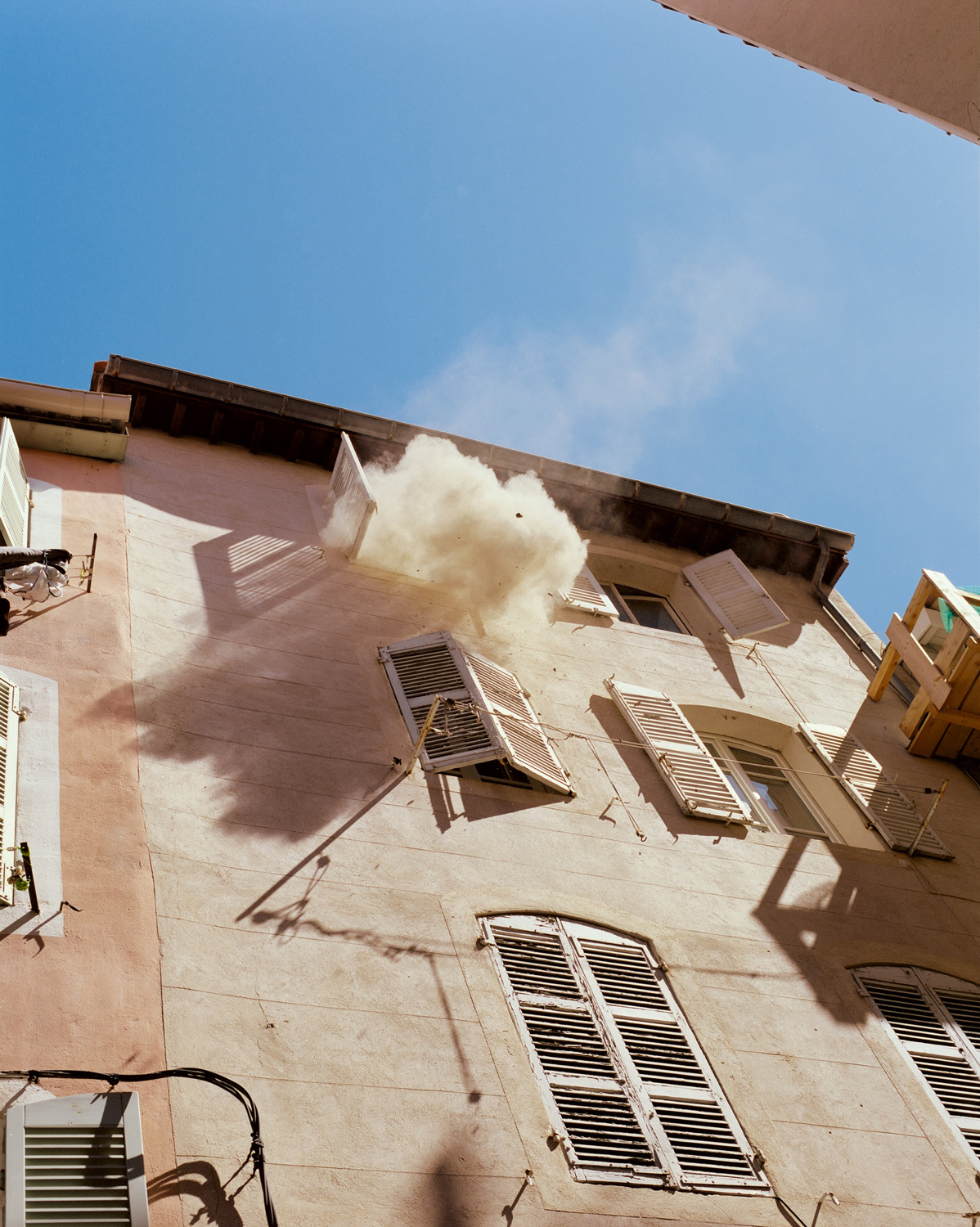
When I tried speaking about all of this with my mother and my aunts, I didn’t really get any answers. I don’t think they were ready to talk about it as the grief was still too heavy. Eventually, I reached out to a gay French-Algerian Imam living in Marseille who was HIV positive that I’d heard about. He invited me to spend time with him and a group of queer Muslim people in Marseille during one of their retreats. That was really where Made of Smokeless Fire began.
From those first conversations in Marseille, how did the project evolve beyond your uncle’s story into a collective portrait of queer Muslim life in France?
I think it really happened during that weekend and over the course of that summer. It was a big entrance into this world. I spent four days with a group of around ten or fifteen people, taking part in different activities, having conversations and showing photographs of my uncle while telling his story.
At first, I was really trying to relate everything back to him. People would look at his photographs and say, “He reminds me of my brother,” or “I feel like I know him.” In that sense, he became the glue that brought all these people together. He’s always remained central to the project and to those conversations. Everyone I’ve photographed has either seen a photograph of my uncle or heard me speak about him.
Part of this work is about challenging the stigma and stereotypes surrounding queer Muslim lives. People are often told that they cannot exist. There’s this widespread assumption that, if you’re queer, you’ll inevitably be rejected by your religion, your family and your community – that Islam is somehow the worst religion in which to be queer. I don’t think that’s entirely true. They’re all complicated. Every religion has its own tensions and contradictions.
What began as a way of understanding my uncle’s story gradually became about understanding a much larger issue that so many people were navigating. After a year or two, I also became much more interested in religion itself. At the beginning, I was really thinking through Muslim culture because it related to my own family and Arabic experience. Later, I became increasingly interested in the broader relationship between queerness and faith, and that expanded the project even further.
I think, ultimately, it was about understanding that there isn’t a single story. I became deeply committed to listening to the nuances of each person’s experience. There are threads that connect everyone, but together they form a much larger web.
This retreat in Marseille. Could you tell me a bit more about that?
Yes. It was organised by an institute called CALEM and Ludovic-Mohamed Zahed, the Imam I mentioned earlier. It brought together people from all over France, and even beyond. For example, there was someone there who had travelled from Canada and was originally from Pakistan. The retreat was also connected with other Marseille-based organisations, including an organisation that supports LGBTQ+ migrants. People from those organisations would come along as well.
Over the course of the retreat, we shared meals together, prayed together and took part in different activities. We held discussions and had social gatherings. We’d also spend time together around the city, going out dancing and enjoying being together.
Was it specifically for LGBTQ+ Muslim people, or was it open to people from all walks of life?
It was specifically for LGBTQ+ Muslim people and their allies. There was also a gay priest there, for example, who was openly welcoming of queer Muslims, and he shared his own experiences and perspective from a Christian point of view.
That’s fantastic.
It really was amazing.
I’ve been reading a bit about Ludovic-Mohamed Zahed – you mentioned him just now. With those early encounters, did he shape the work? Did those meetings really get the project moving?
Yes, definitely. Through his research and through the people I met at that retreat, the project really began to take shape. Ludovic-Mohamed is very much a scholar, but my background is not academic so I was not comfortable, nor interested in, approaching it this way. What was important for me was the community that gathered around him, because it allowed me to meet so many different people. He was certainly influential in the beginning, but I also didn’t want the project to remain entirely within his circle or be framed solely through his research. I wanted to carry out my own outreach as well.
That same year I went to Radical Pride in Paris. Six years ago, it looked very different from today. There was very little visible representation of queer Muslims and Arabs, although I think that’s changed a great deal over the last couple of years. Radical Pride is a much more intersectional march than the main Pride parade. You’ll find queer people from immigrant communities, sex workers, working-class people and many other groups represented there. At the time, I remember seeing just one person carrying Algerian flags. I walked over to introduce myself, and she became
one of the first people I photographed after meeting at a public event.
I was also reaching out in other ways. I worked with other organisations, met people through them, posted open calls online and connected with people that way too. Eventually, it became word-of-mouth through different communities. So, I didn’t want the project to revolve entirely around Ludovic-Mohamed and his world. That said, he was very central to the beginning because he introduced me to so many people. He connected me with organisations supporting queer migrants, including groups helping LGBTQ+ asylum seekers in France, and with colleagues and other people he’d met over the years. From there, I was able to build relationships with many more people myself.
The project really became an act of collaboration. You had to find people and build enough trust for them to allow you to photograph them. How did you approach developing those relationships?
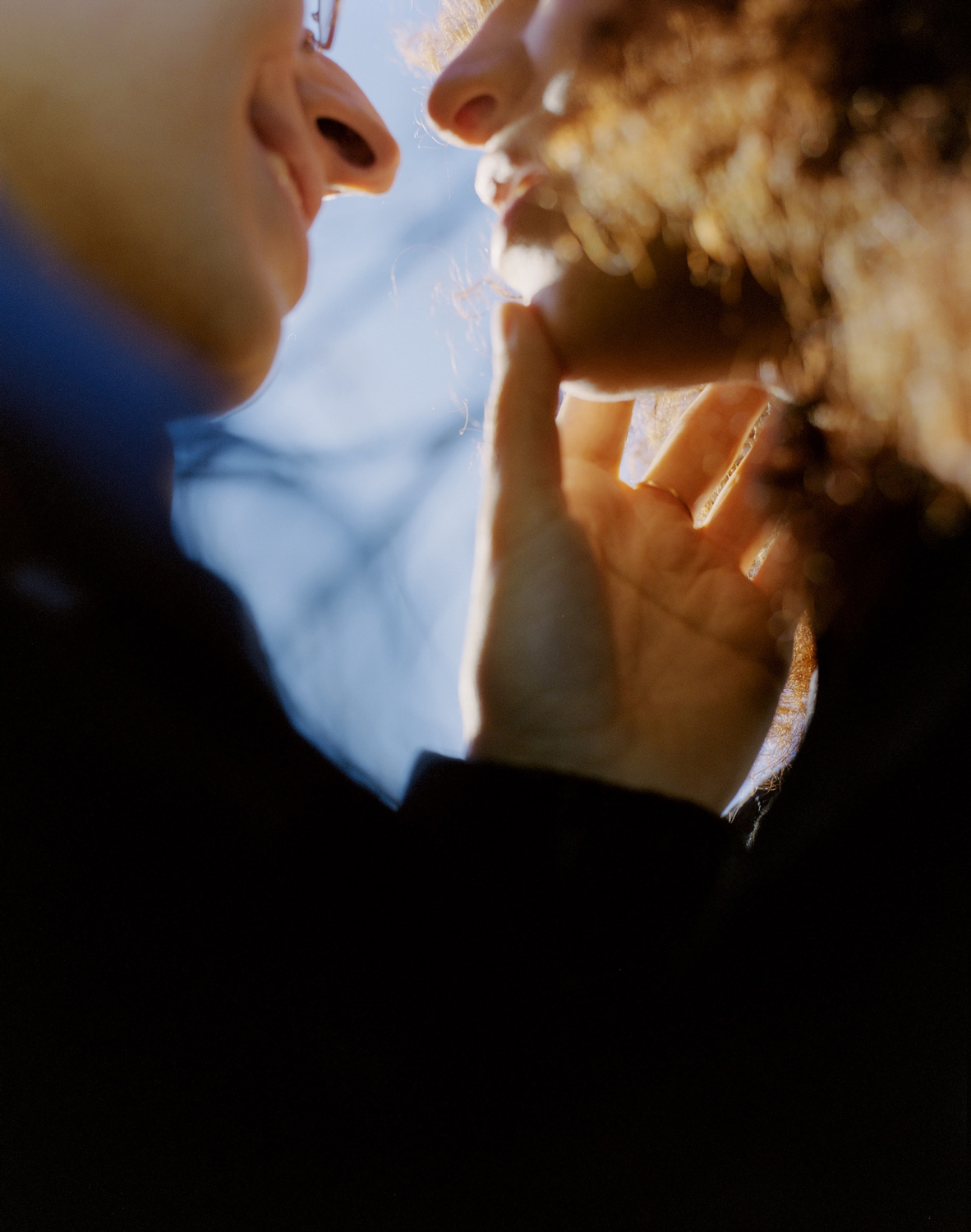
I don’t take my camera out for quite a long time after meeting someone. I try to be very clear about what I’m doing because, when you’re working on a long-term project, you don’t necessarily know where the photographs are going to end up. You don’t know which images you’ll choose, whether there’ll be a book, or who might eventually publish the work. I always try to be honest about that and explain where the project is at when I meet someone. My practice is much more centred on listening than it is on directing people I photograph. Of course, everything we talk about informs the portrait that eventually gets made, but I spend much more time trying to establish a genuine connection. Because of the nature of the project, the conversation quickly becomes very personal. In most cases I’m meeting someone for the first time, and I think there’s something interesting about that. Sometimes it’s easier to open up to a stranger than it is to a close friend.
People were incredibly generous in sharing their stories with me. In some ways, it’s a bit like talking to a therapist – someone who isn’t part of your everyday life. We would spend hours talking about faith, identity and sexuality before ever making photographs. There’s a process to it, but I never really know where it’s going to lead. Sometimes we don’t make any photographs at all and arrange to meet again. Sometimes that second meeting never happens. Other times we photograph for two hours, and sometimes only for fifteen minutes.
What I found really beautiful was how willing people were to trust me with such intimate parts of their lives.
There’s a huge element of trust being placed in you.
Definitely. For many of the people I met, it was the first time they’d ever been able to speak these things out loud. I think that’s changing a little now because there are more books, more events and more representation in the media and in culture generally. In a way, the project became about creating a space that didn’t exist before.
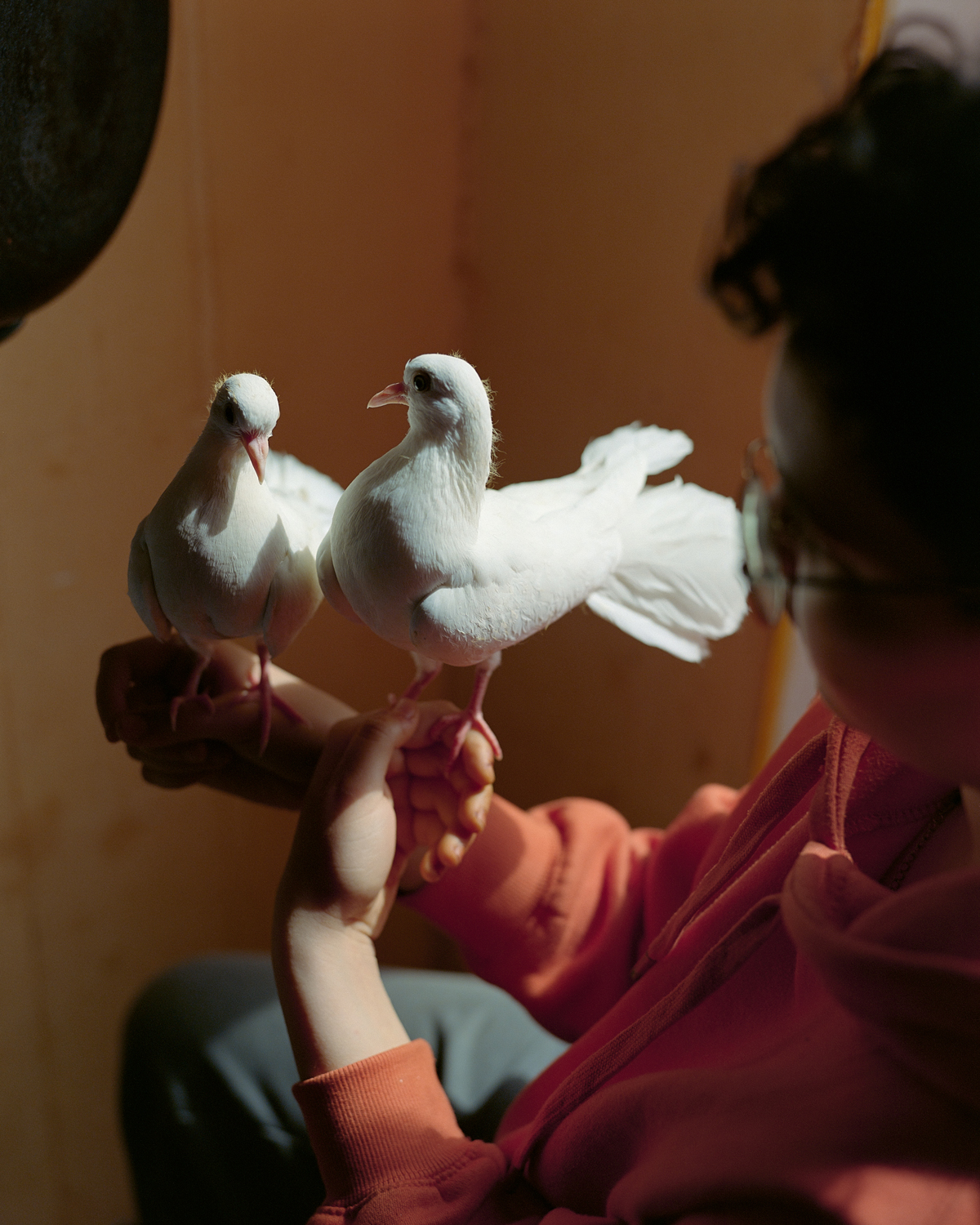
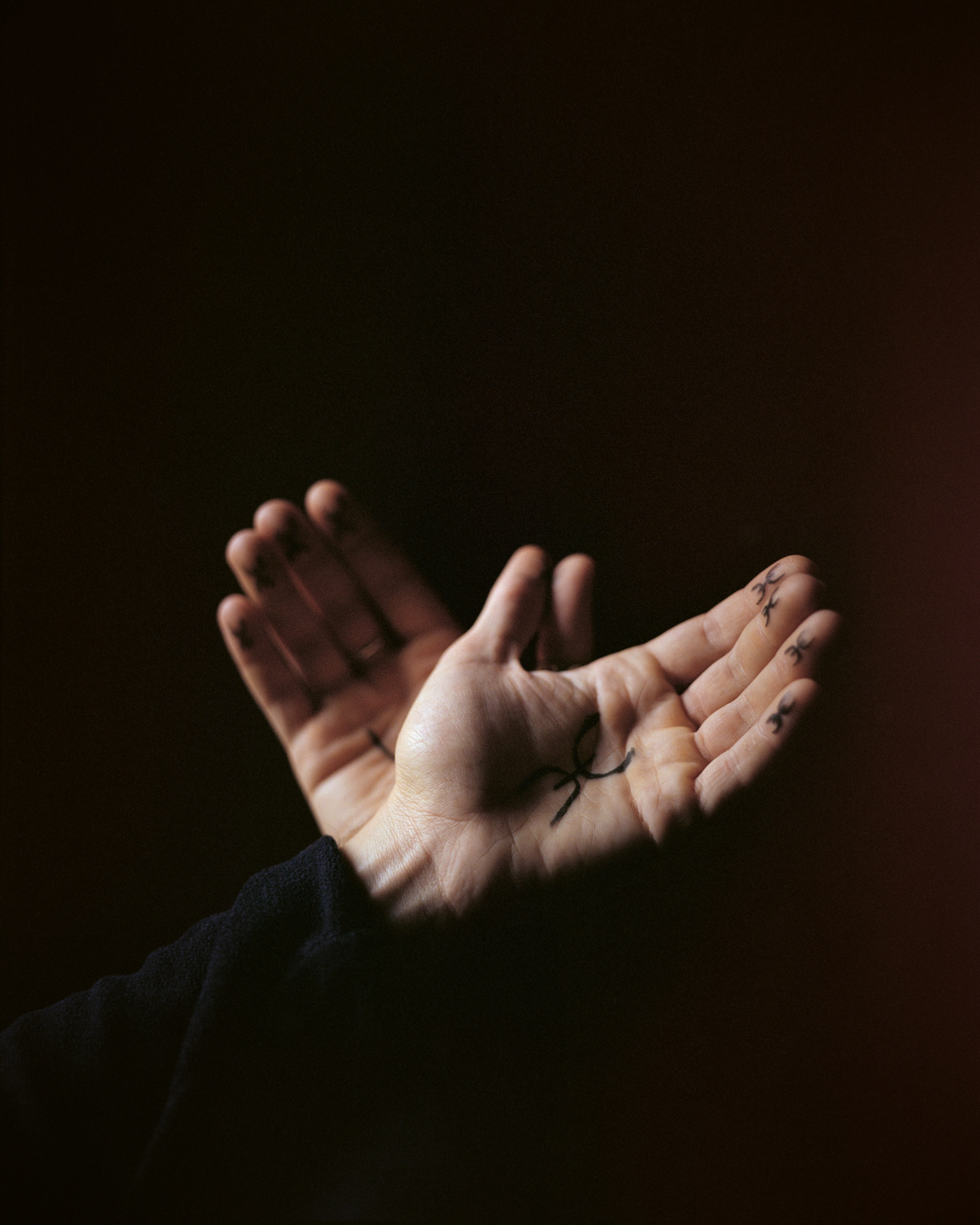
In your project statement you ask, “How do we photograph the invisible?” Based on what you’ve said about spending time with people before photographing them, how did you go about answering that question?
I think the first question is whether or not someone wants to be recognised. There’s a difference between anonymity and invisibility, but there’s also a tension between the two that I’m trying to explore in the work. Sometimes anonymity is about protection. Invisibility, on the other hand, is about not being seen at all. In the case of queer Muslims, people sometimes refuse your existence because they don’t believe it’s possible for you to exist.
Then there’s another kind of tension around visibility and invisibility as immigrants in France. People notice you immediately because of your skin colour, your features or the way you dress, perhaps because you’re wearing visible religious signifiers. In that sense, you become hyper-visible. But at the same time, people only see the surface. They stop at that outer layer. You’re reduced to a category, put into a box or pushed to one side. I think that’s an experience many immigrants share.
Some people want to remain anonymous because they’re not out to their families, or sometimes they’re not even fully out to themselves. For some people, seeing themselves recognised in a photograph can be frightening – not only because of their family, but because of where they are personally.
So, the challenge became: how do you remove identifiable features without recreating the same act of erasure that’s already imposed by society, religion or family upon someone’s queerness? That’s the fragile balance I’ve been trying to explore photographically.
One thing that’s important to me is that, even if someone tells me they’re happy to be recognised, I’ll always make photographs where they aren’t identifiable as well. Partly that’s become an exercise in expanding my understanding of portraiture beyond photographing someone’s face. I want to tell stories in other ways. It’s also because I know how these decisions can change. Someone might leave a conversation feeling empowered and think, “I’m ready . Y ou can show my face.” Then, a few weeks later, they might feel differently. That’s happened several times. The reverse is true as well. If someone asks for anonymity, I’ll still make portraits where their face is visible – not for publication, but so I can give them photographs of
themselves for their private use or archive. They can keep them, share them with someone they love. Sometimes, months or even years later, someone will come back and say, “Actually , I feel ready now . Y ou can use the portrait where you can see my face.” I try to create space for both possibilities.
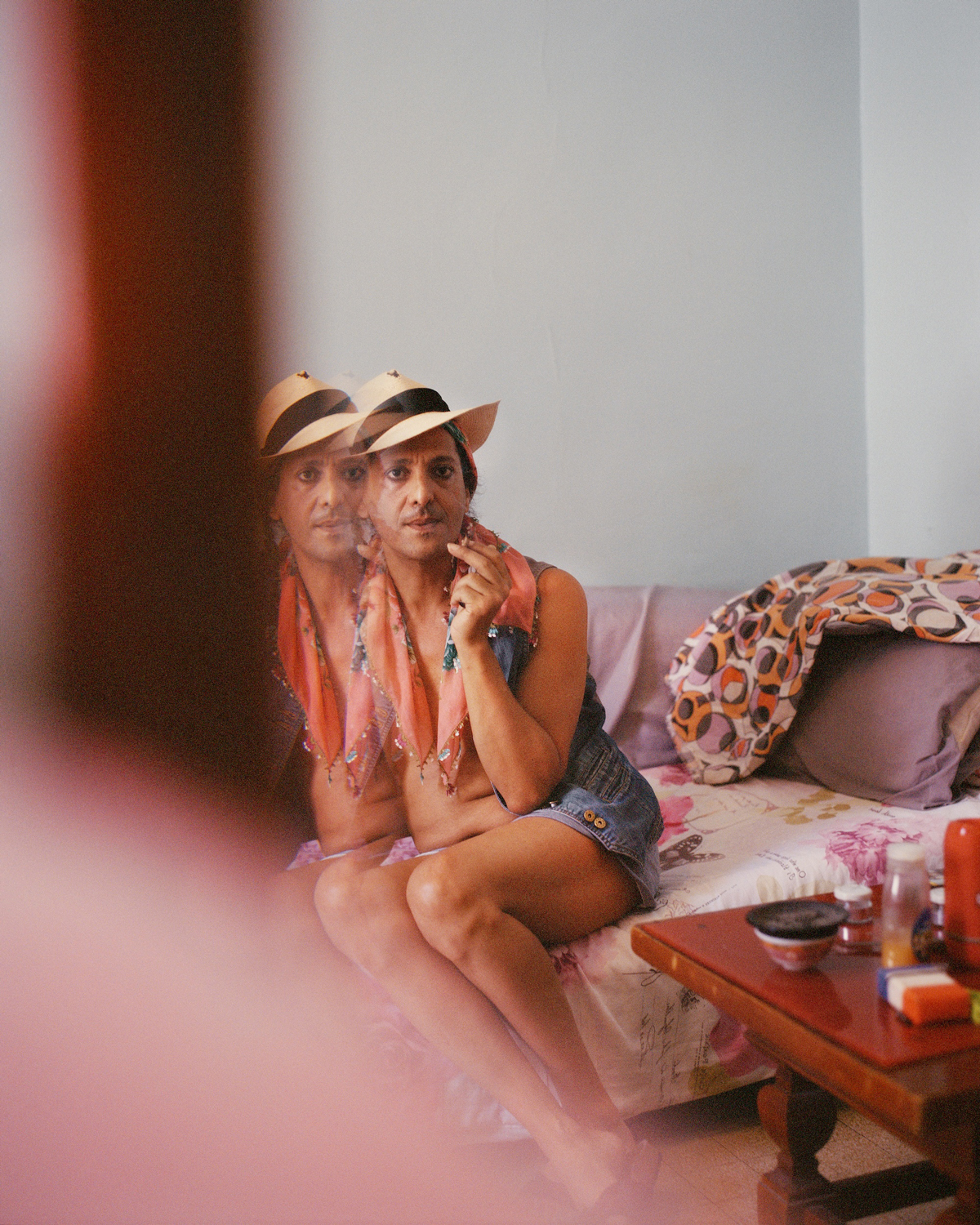
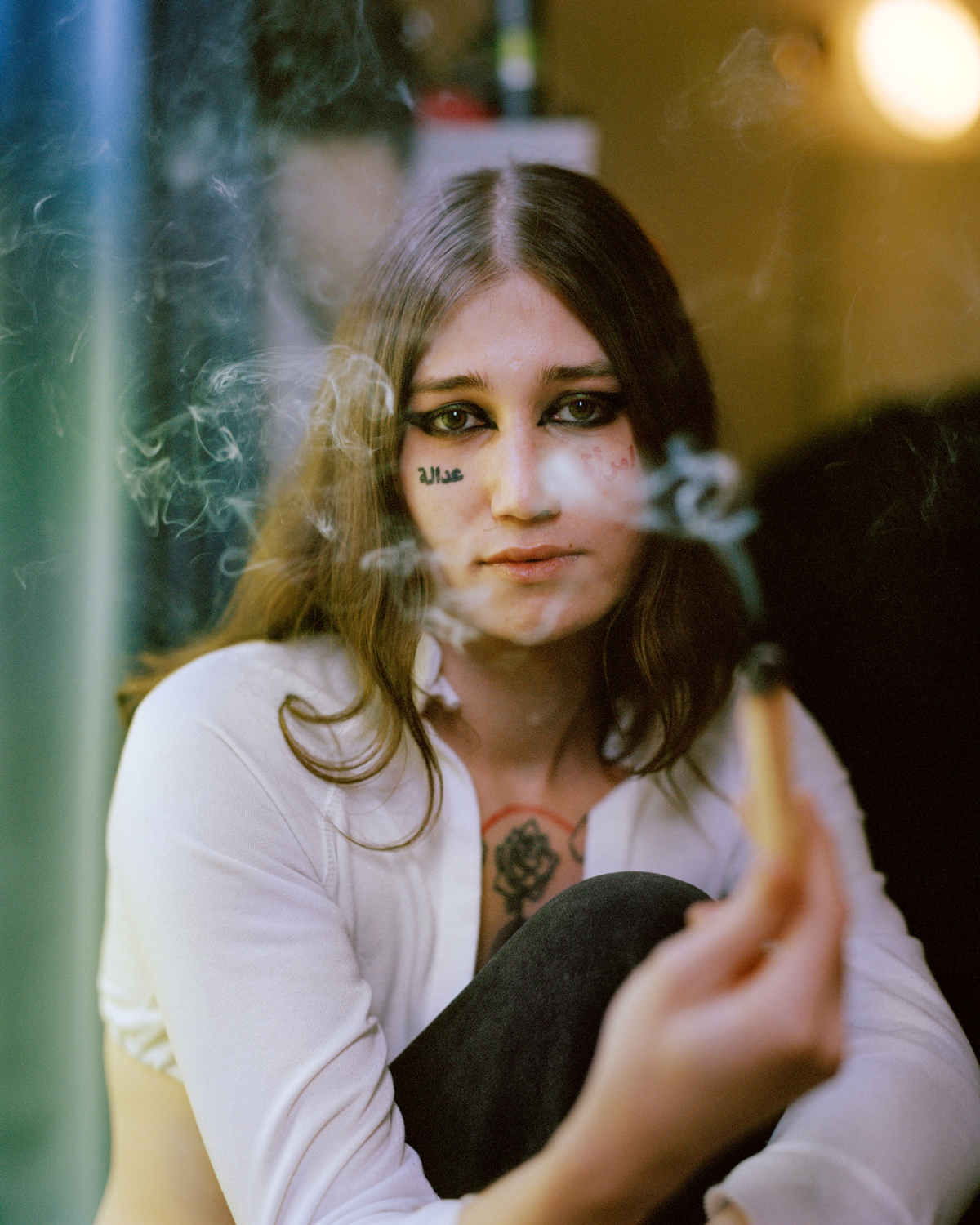
There are two photographs of Bouchta, one of your subjects, placed side by side. In one they are sitting on a sofa smoking a cigarette, and in the other they’re reflected in a mirror with a covering over their head. I’m interested in how you approached sequencing the book. Were there particular decisions or combinations of images that evolved as you developed the edit?
What did you think of those two photographs being next to each other?
I think they’re perfectly sequenced. They work beautifully together. There’s a duality there.
That pairing wasn’t my original idea, it was Sarah Chaplin Espenon, editor at Loose Joints. The mirror photograph had been my closing image for years. Whether I was making a book dummy or sequencing an exhibition, it almost always appeared at the end. Pairing the two images together was actually quite a recent decision. I think it works because it becomes a kind of revelation. The first image in the mirror came from a very playful moment. I think there was a curtain hanging nearby, and Bouchta draped it over her head. We experimented with lots of different ideas during that shoot. Then, when you turn the page, you’re actually looking at another photograph made in another mirror in her apartment. The doubling happens because the mirror itself has a slight angle to it. I love photographing through mirrors.
At the time I made those photographs, I was also thinking about this idea of doubling. Bouchta is someone who lives with many different identities, and I’ve spent a lot of time with her over the past five years whenever I’ve visited. There isn’t one simple answer to how she experiences her identity.
The doubling in those photographs can speak to the plural identities people hold as queer Muslims, as immigrants or as the children of immigrants. But in Bouchta’s case, it also speaks to the different parts of yourself that you have to live with internally.
It’s a beautiful image.
Thank you.
You mentioned your love of photographing through mirrors just now, but did you encounter any creative or practical challenges while making the project?
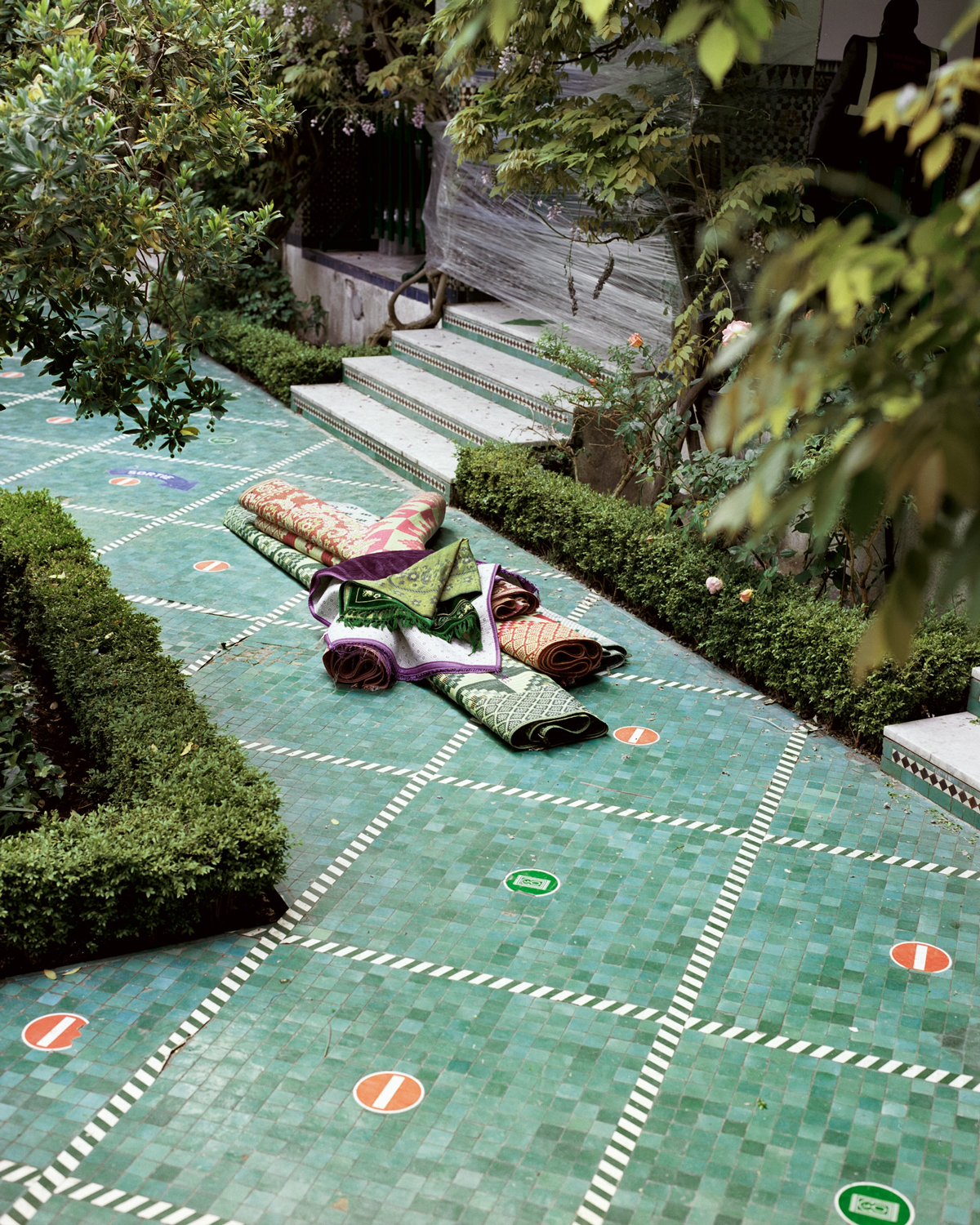
Well, my camera broke at one point and I lost about twenty rolls of film because I didn’t realise it hadn’t actually been exposing anything. That was a technical challenge…creatively, though, I actually enjoyed working within the constraints of the project. A lot of the photographs were made indoors. When I began the project I was very focused on photographing people inside their homes because those spaces felt important. It can be difficult to practise your faith or fully express yourself in public, or around family, whereas your bedroom or apartment becomes a place where you can be yourself without facing that discrimination.
I photographed almost everyone in their own space. That created practical limitations because many people lived in very small apartments. We were working entirely with window light, and because we always spent so long talking beforehand, we often ended up photographing during the last light of the day. Those constraints became part of the work. There was also one photograph – one of my favourites – that had to be removed from the project for about a year. The person in the photograph was going through a period of questioning and uncertainty. Although she wasn’t recognisable in the image, I felt I needed to let the photograph rest for a while. It’s the photograph of the hand coming out from behind the curtain. It was one of my favourite photographs, but I accepted that it shouldn’t be included in exhibitions or sequences for a while.
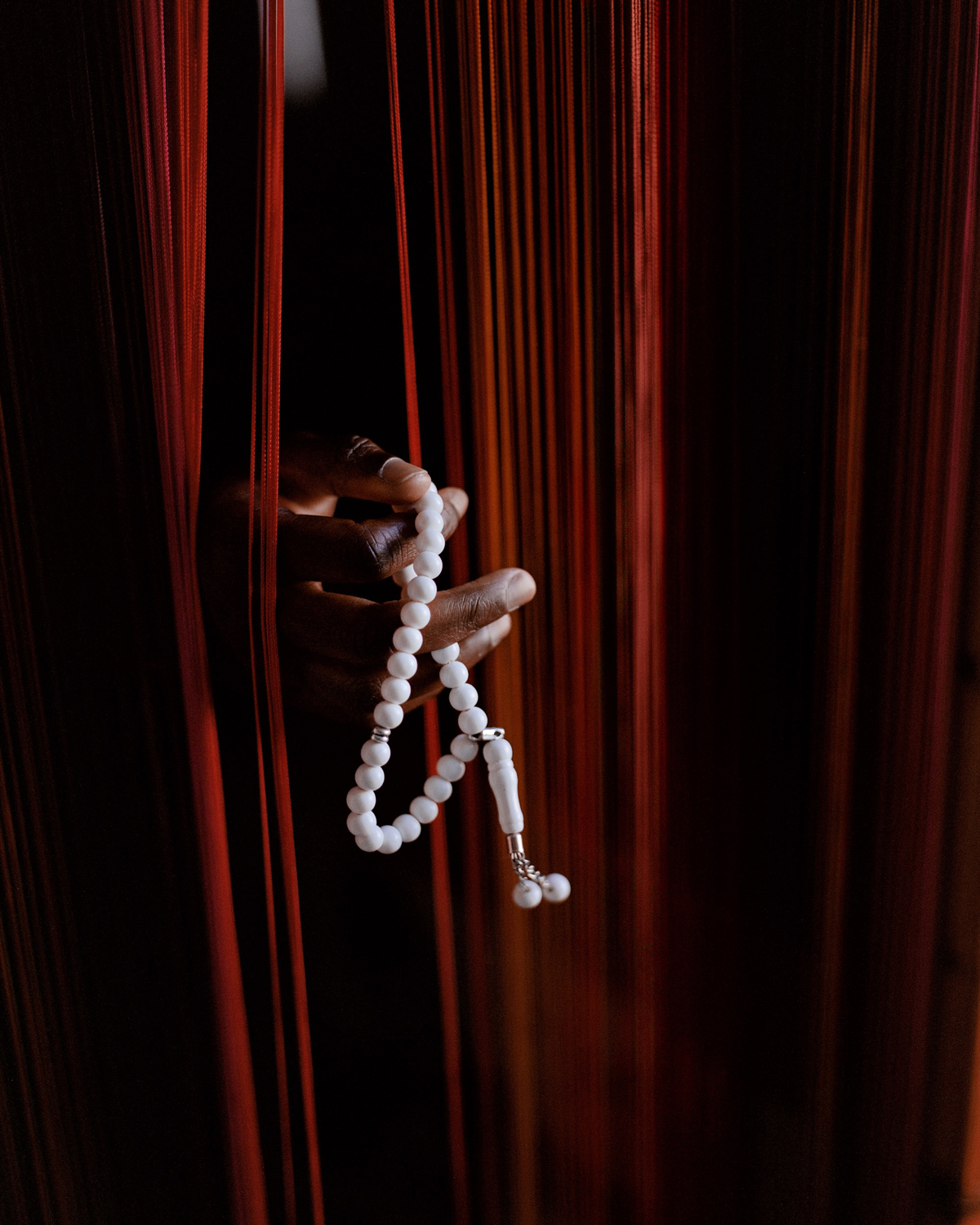
To that person, the photograph had become part of her own journey towards self-acceptance. Even though she couldn’t be identified, the image represented something very personal. It’s a strong photograph symbolically – someone emerging from behind the curtain, holding beads and reaching towards the light while still remaining partly hidden. It reflected everything she was experiencing at the time. She wasn’t ready for it to be part of the project. But, as her own life changed and she became more accepting of herself, she was happy for the image to be included again.
It’s a very powerful photograph. It was one of the first images I was drawn to when I looked through the book.
Thank you. There are around fifty people in the project, photographed over five years, and that’s a huge responsibility. Carrying those photographs and those stories into the world is as much a part of the work as making the pictures themselves.
For me, it’s just as important to make sure the people behind the photographs are protected as it is to make the photographs in the first place, and when someone didn’t want to be photographed, it became an opportunity to find another creative solution.
It certainly sounds as though trust sits at the centre of the project. With that in mind, many of the photographs almost become placeholders for the conversations you had with people. Do you think of the book primarily as a record, a meditation, or something else entirely?
I think meditation is probably closer. The book is really about emotion. It’s an emotional journey more than it is a documentary record. Of course, there are some portraits where you can clearly recognise someone and perhaps identify them as queer or Muslim. But many of the photographs don’t work that way. I became much more interested in recording emotional experiences.
Over the last five years I’ve shared so many different experiences with people – long conversations, singing prayers, deeply spiritual moments, crying together, laughing together. I’ve met people who were starting a family, who didn’t speak to their parents at the time, and then watched them introduce their children to their parents two years later. I’ve seen people move through evolving emotional journeys.
Those emotions are central because they’re about agency, which is about existence, which is about survival. What I wanted to capture were feelings that are almost impossible to understand unless you’ve lived them yourself. If someone spends time with the book, I hope they come away understanding that there is love, there is joy, there is spirituality, there is anger – there’s an entire emotional landscape. The sequencing of the book is really driven by those emotional movements.
Alongside these emotional movements, one of the things that comes across throughout the work is that visibility, community and simply living openly can become acts of resistance. What else do you hope people come to understand differently after spending time with the work?
The first thing I want the work to say is that these people can, and do, exist. I’m not trying to argue that there aren’t real problems. There are. I’m not trying to claim that Islam is somehow completely accepting of homosexuality. I’m trying to show that it is possible, and that within these communities I found so much beauty. At one point I even thought about converting because I was so moved by the faith, the love, and the sense of community I encountered.
So, first, the work is a statement of existence. Then, if you spend longer with it, I hope it becomes a statement of beauty. Above all, I hope it challenges the stereotypes people carry. The more we show that queer Muslim lives can be lives of love, beauty and community, the more we can challenge the discrimination that surrounds them. If we erase people’s existence, their experiences and their reasons for living authentically, then we’re only reinforcing that discrimination. I also hope that someone who is a queer Muslim, but who doesn’t yet have a community around them, might come across this book and recognise a part of themselves within it. Of course, I can’t change minds through art alone. People have to be willing to engage with it.
Made of Smokeless Fire by Camille Farrah Lenain is published by Loose Joints, through www.loosejoints.biz
All photos © Camille Farrah Lenain 2026, courtesy Loose Joints