Interview 098 • May 25th 2026
- Interview and Portrait of Ben Fraternale by Lou Noble
About Ben Fraternale
Ben Fraternale is a New York-based multidisciplinary artist driven by an endless enthusiasm for creativity and moving images. He's worked with Delta, the NBA, Nespresso, Polaroid, Brooklyn Film Camera, IBM, Bed Bath & Beyond, GM, Verizon, Buy Buy Baby, Mars-Wrigley, and many others.
Links
Foreword
Photography, real photography, is about loss. The face across a decade. The motel sign on a county road in New Mexico that will be a foundation slab and some weeds in five years. Everything you love, forgotten. Most photographers photograph this and call it nostalgia. Ben Fraternale photographs it like a man trying to outrun his own demise.
He's thirty-three. He lives in New York. He has built a career on a film stock that's been niche since he was in high school, and he wants, in his own words, to take your funeral photo. The good kind. The one that gets you remembered.
-Agustin Sanchez
----
This interview has been edited for clarity and content.
Interview
When you’re taking pictures right now, what is it you’re trying to do?
It’s a constantly evolving thing. One day I’m a preservationist, another day I’m just taking pictures of people and deriving joy out of that, but I think, ultimately, I’m driven by a need to instill moments and images in time, and something about that is core to my person. How that manifests in the images themselves is not necessarily so vividly clear to me, but I’m always trying to steal a moment, in particular when I’m on the road and I’m traveling, which, I travel a lot, so it’s become very core to my photography.
I love endlessly searching and adventuring and driving for hours, looking for things I sometimes never find, but when I find that thing, if I can capture that moment in time and make it something timeless, I think that’s what I’m looking for.
And it manifests in a variety of ways. I think with Polaroid, it’s the perfect format for doing that because you create something physical out of reality in an instant. You end up with this physical object of a place, especially with the Polaroid 8×10 format. That’s part of why I love that format maybe the most, because it’s the ultimate example of this. It’s the closest “stealing” of a moment that you can get. That’s my vibe right now, although it’s always changing.
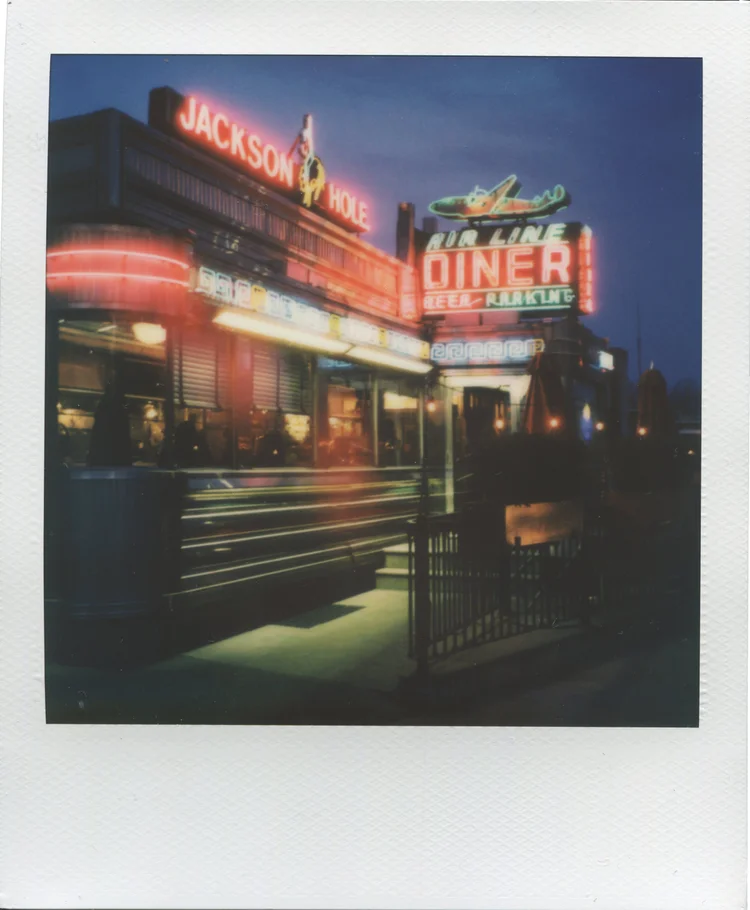
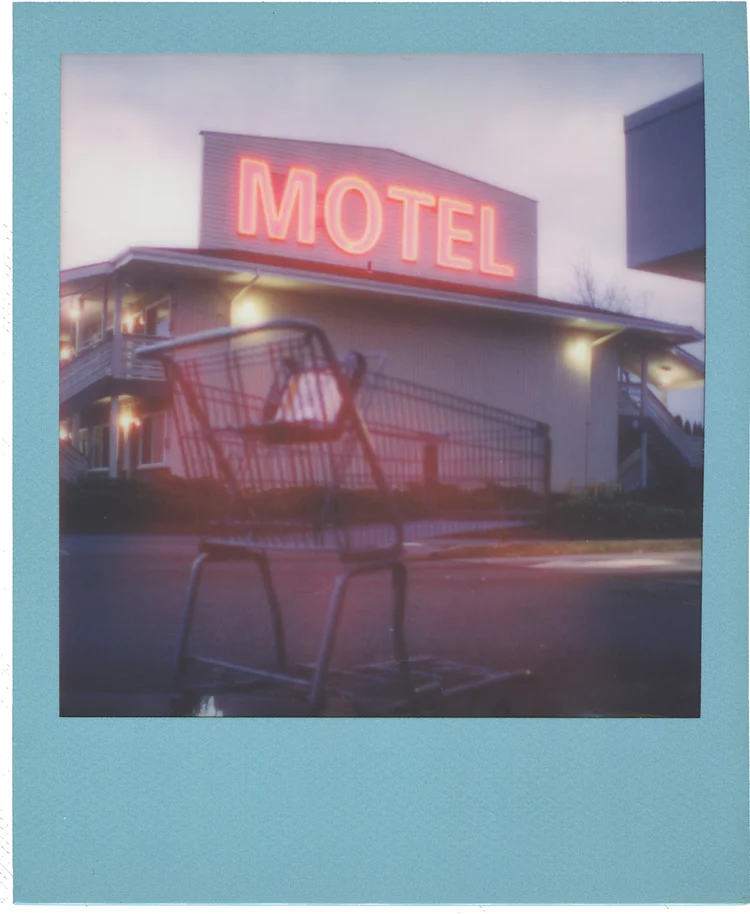
When you’re making the Route 66 images and looking at old motels, do you know what it is you’re looking for when you see it?
Yes, I really do. There is a fine line in my journeys,, between something that’s decrepit and makes me feel sad, and something that looks like someone has put care into maintaining some sort of visual presence, an aesthetic that actually is preserving that place.
I’m occasionally drawn to something that’s dilapidated or has a particularly interesting condition. But I think, for the most part, when I see a motel that looks plucked out of the 50s, I’m like, okay, my photo of that thing may also look plucked out of the 50s or have 50s vibe modern spin on it.
I think a lot of people who shoot the kinds of subjects that I shoot often end up depicting the imagery in a way that makes me dour, because you feel the loss that has come from time. And I’m more trying to celebrate time itself and not necessarily show something in its worst state.
What is it you want someone to take from a photo of one of those motels? What do you want your audience to feel?
I want them to feel like they’re looking at a postcard they found in a drawer that has some handwriting on the back. I want someone to feel transported. That’s the main thing for me, whether it’s because it’s particularly alluring or because there are elements in the light and color that draw them in, I want them to feel like, “oh wow, I’m standing there.” Especially because the Polaroid format brings unreality into the mix, but have it still feel like this is an artifact of something. Like when you go into a museum and you look at an old image, it brings you there for a moment.


There’s that one big Polaroid you took of, you know, the Manhattan skyline. What is it you want someone to take from that? Because that’s slightly different than trying to preserve a feeling.
It is, it is different. That image in particular was interesting…I grew up in Manhattan. And my memory of going to the top of buildings and overlooking things is colored with a bit of the stuff that your memory sprinkles onto images. And getting the opportunity to even be in the position to take that photo was very fortunate. And I felt, because I had that opportunity, I wanted to make something that had an almost dream-like, almost gothic, heightened look to it. That’s what I was pulling from in my own memory because I could have taken that picture 10 minutes later, it would have looked completely different. 10 minutes earlier, would have looked completely different. I took the photo in that moment because that was the feeling I got in that moment of the light and the way the buildings looked.
One thing I don’t know if I’ve heard before is how you got into Polaroid specifically?
Well, Polaroid has been around me so much and I’ve used it so much over my lifetime, through elementary school, into high school. It being a thing that I would bring to the last day of school or, you know, it was an accessory that my mom basically would put in my hands and say, “now go to school” and/or “now go see a friend.”
“I want lunch.”
“No son, no lunch, but I did buy you this 10-pack of film.” Growing up around it, and having handled it so much growing up, I grew to associate it with a lot of things and a lot of key moments in my life. As I grew as a photographer and entered the professional field, I entered a malaise that a lot of people are familiar with, where you’re using digital tools so much in your professional life, and you use those same tools in your personal work, you start to lose some sort of connection. You think, “what am I actually doing? Is this enjoyable? What am I missing here?” Then my mom reintroduced me to it, she got me an Instax Mini right in the early Impossible era, and I fell in love with it again.
I was using it solely as a party thing, it took me a few years to realize it might be the missing piece. There is something that I was looking for that I wasn’t getting out of pointing a sensor at a person or an object ,that I began getting from the magic of a Polaroid, and that switch flipped immediately. It was not a gradual thing, it was like, “okay, this is related to my past, this is related to my future, this is something I’m connecting with on a tactile level,” and I think it just clicked. From then on, pretty much, it’s been a daily driver.
Do you remember when that was?
I think that was probably 2016. That was when I started. And the photos from that time are still not particularly artistic, or don’t necessarily match up to what I’m doing now, but they were the early stages of starting to understand this feeling. And it took years for it to grow. Probably seven years ago is when I really snapped into it and started seeking things that I thought would be perfect for Polaroid.
Why do you think that change happened?
I mean, this is such a bad answer, but this is the honest truth. I had been shooting Canon digital cameras forever. And I got a Panasonic GH4 for video production. And as a result of that, switching over systems, I started using it as a photo camera. That basically deleted my interest in photography. I literally stopped taking photos and I didn’t even consciously realize why it had happened. In picking up the Polaroid again, and starting to apply it, that’s when the switch flipped. I had totally lost this thing, and it came surging back. From then on I was completely Polaroid-pilled.
When you look at kind of those early Polaroids, do you understand what that
evolution was for yourself?
It was so abrupt in some ways that I feel like I immediately was seeking what I’m still seeking today. So the evolution has been more in methodology than what I actually was seeking through Polaroid. I’m getting the same thing that I got from it, you know, in 2018 or whatever that was. How I’m going about it has changed, my techniques have changed. But the actual core driver is basically the same. I’m 33 years old, turning 34 shortly, and I’ve gone through many periods of my life with obsessive interest in certain things. I really am obsessive about the things that I love.
Cocaine/photographs/traveling.
Exactly. But this started as something where I was wondering, “is this a phase? Is this something that is scratching an itch right now that is eventually going to sort of fade a little bit?” But it didn’t. It only grew. It grew even more when I started meeting people that were associated with the product’s creation, other people who use it, finding that community element, and finding an audience as well, people who want to even look at my images, and that are interested in techniques and how I did certain things. It all fed in together.

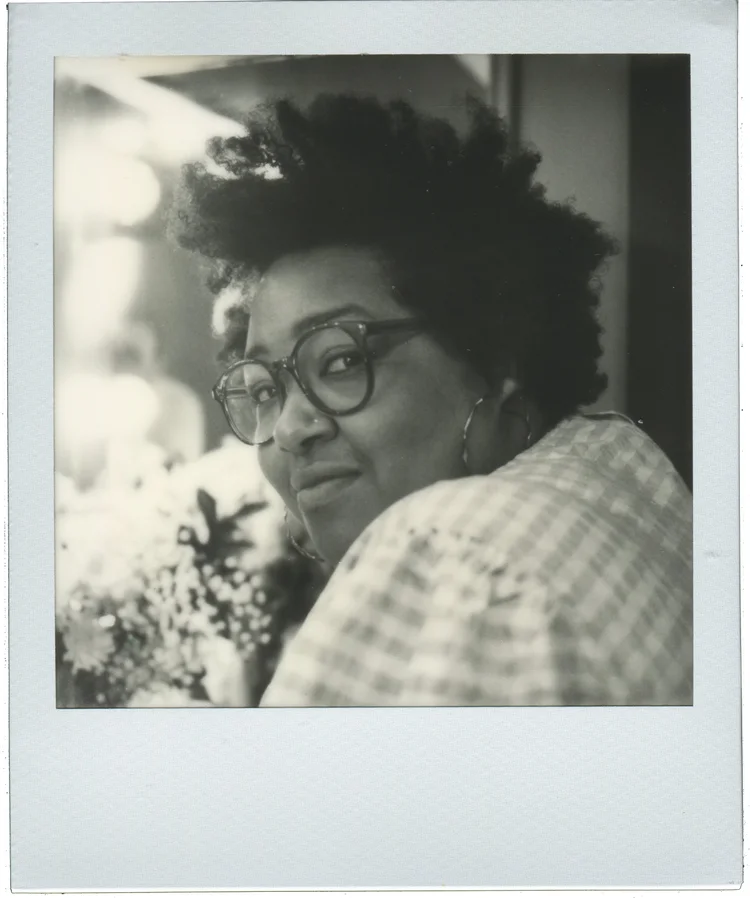
How has your work changed since becoming popular in the Polaroid community?
It’s encouraged me to push myself. I think I’m very self-competitive, very self versus self. I’m constantly trying to improve and seek the next great thing that I can do. Having community, having people that react to things that I’m doing live, it helps keep me honest about all those things and keeps me more focused, because it’s arbitrary. It’s not commercial mainstream popularity. It’s all something on an app or someone in a comment section or friends, but it’s still a motivator and still a guide for me to think, “okay, I can’t not post for the next two months. I’ve got to make something today.” Even being part of the 1212 project, it’s once a month, you’ve got to do something. And having that little kick is important. It’s important for freelancers. I’m a professional freelancer. You constantly need a kick in the butt.
Do you find that it pushes you artistically? During your trip to China, of course, there’s, “I want to go to these places. I want to talk to these people.” Is it also in your head, “I want to take these kinds of photos.”
Yes, to a degree. China was an interesting one because I was limited in what I actually chose to do. I was essentially guided through the experience.
How did the China trip come about?
In June 2025, I received an email shortly after a photo convention, from a man in China who had commissioned a brand new 20×24 Polaroid camera. That’s an astronomical endeavor to me, because the film has been discontinued for 17 years.
But this man sent me an email, told me he was a big fan of my YouTube channel, felt like we were kindred spirits, that we needed to immediately start talking about Polaroid, we need to start chatting. And if the mood strikes, I’m invited to Shanghai whenever I want, he can show me the city, we can make it an In An Instant episode. He basically just threw it all out there, wrote the email, and I just couldn’t let it go. The thought of doing that was so interesting to me. As someone who’s always seeking, I was like, “well, this is an interesting thing to go out and do and an adventure that could change my life.”
A few months pass, I get my visa, and I go out there. I met probably a hundred different people, I was constantly being introduced to artists, to people in the government, constantly going to interesting places and completely foreign places.. I had never been in Asia, so it was a true culture shock. And I find that culture shock is difficult to experience these days because of our exposure to literally everything that’s ever happened. It was an actual genuine experience that was surprising in every corner.
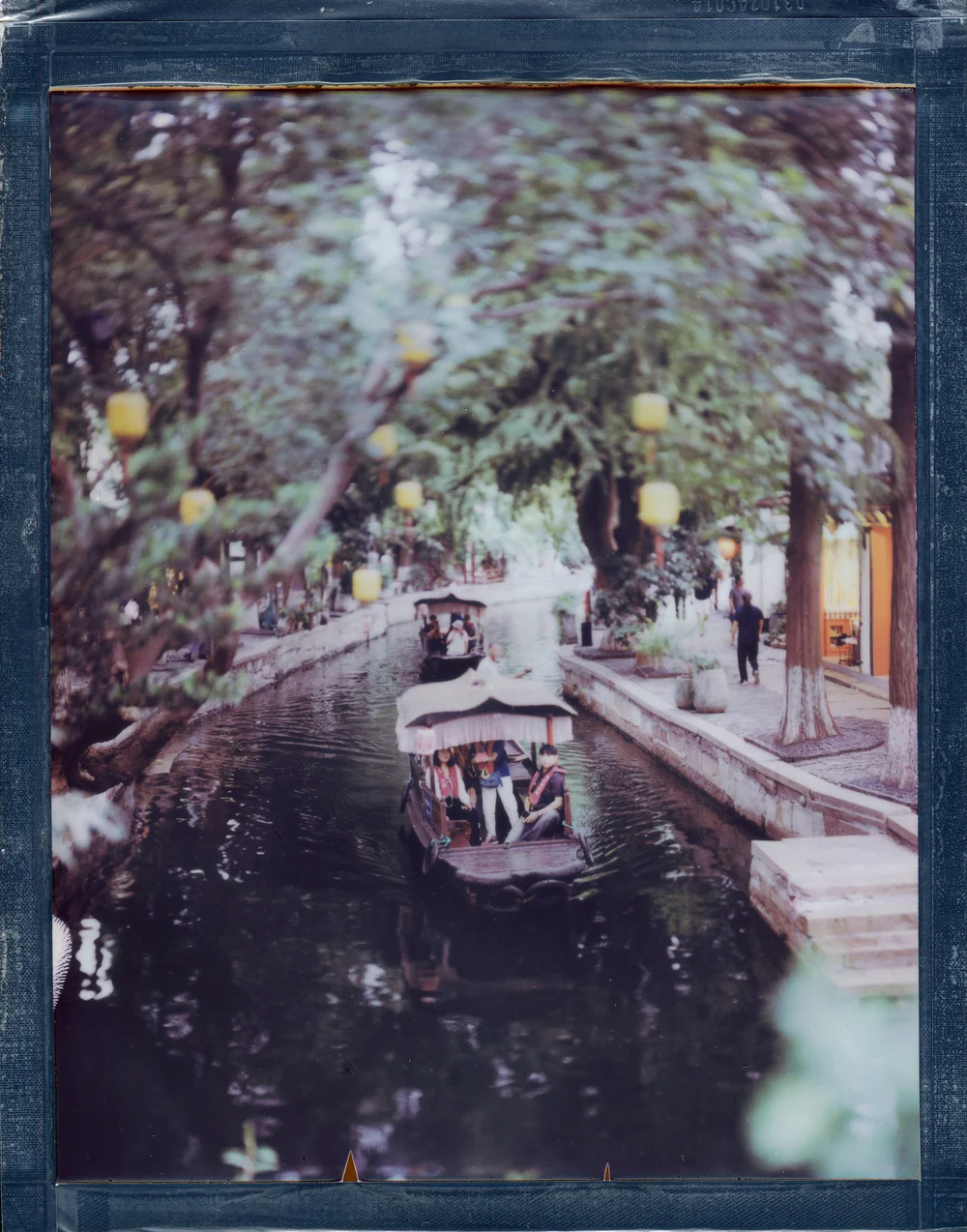

And to your earlier question, on day two, we got back to our hoteland we’re like, “what are we doing here? What exactly are we trying to show here? Did we, in those first two days, actually do anything that would provide value to people, or did we just nod our heads and go along with the next thing that was happening?” And from that point on, we started pushing more against something we were being presented or, for example, we were introduced to a bunch of cosplayers and someone was taking their photos and the guy I was with was like, “here, you can take the photos of the cosplayers as well. You definitely should jump in there and do that.” And I was thinking about it, that’s not really my thing, I stepped away. A few minutes later we circled back to it and I was like, “I gotta be honest. I’m more interested in the human beings that I can more easily relate to and potentially are more interesting because they are authentically themselves in this moment, versus someone who is portraying a character or essentially modeling.”
I was much more interested in photographing the photographer, this crazy guy who brought five boxes of Polaroid 8×10 film on a Wednesday to this shoot. Once I peeled that layer back, I got to have this unbelievable relationship with this guy, Leo, who was the one shooting the cosplayers in the first place. I kept pushing us to fight against shooting pure artifice and try to get something a little bit more humanistic. Ultimately that was the most important thing to me, both in the images and the video. And I think it’s something we actually accomplished, which under that level of stress and moving as quickly as we were, I think that’s an interesting accomplishment. I’m pretty proud of that.

When you guys are were the Great Wall of China, you definitely seemed to have a strong idea of what you wanted to capture. What did you want from those pictures?
That’s a good example…as we were all on the train going to the Great Wall, we were discussing it. What do we want to do there? We’re going to be under pressure. Security is going to be coming after us. This is unsanctioned, to a degree, and we just need to go out there and do it. And under that strain, it’s difficult to think, “how do I want to organize a frame? What am I exactly trying to show here?” But I was interested in taking the Polaroid frame and creating a standalone object that is aesthetically interesting and well-organized. Something that you could put on a wall as a memento of the Great Wall of China.
Whether or not we captured it on that day is in question, because it was very difficult and we lost several frames because we were trying to process the film at the Great Wall. But in a lot of these instances where you’re in this completely foreign place that has been photographed a bajillion times, one of the most critical elements to me is, maybe it’s been done a billion times, but they’re not me standing here with film that’s been expired for 20 years, where no one knows exactly what it’s going to look like.
No one is going to be able to create this image other than me right now. And that’s part of the magic to me of Polaroid, you’ve got this alchemy of a person taking the photo plus this image that is also a living, breathing one-of-a-kind object. That’s what gets me excited about shooting even the most generic thing. And I think I brought home stuff that’s…at least it’s my stuff, even if it’s been done, you know, by tourists over generations.
So for you, the tools that you use provide a lot of your voice.
I would say so. I am easily overwhelmed by the notion of that idea, of every subject being shot before and that everyone’s seen everything before. But creating something that has a unique imprint is doable in a billion ways. As photographers, we know this, you can manipulate light, you can manipulate your subject. But for me, when you’re shooting something that’s kind of an objective scene, such as the Great Wall of China, it’s not going to pose for you.
You have to take your tools and make something that is at least somewhat unique to you that, in many ways, is tied to the format itself. When there’s human beings involved, you’ve got a little bit of a different equation. And we did a lot of portraiture out there. But again, they were under these interesting conditions where you can’t really communicate well with the person you’re shooting. You can only move them so much. In some cases, we were shooting people that were nearing 100 years-old.
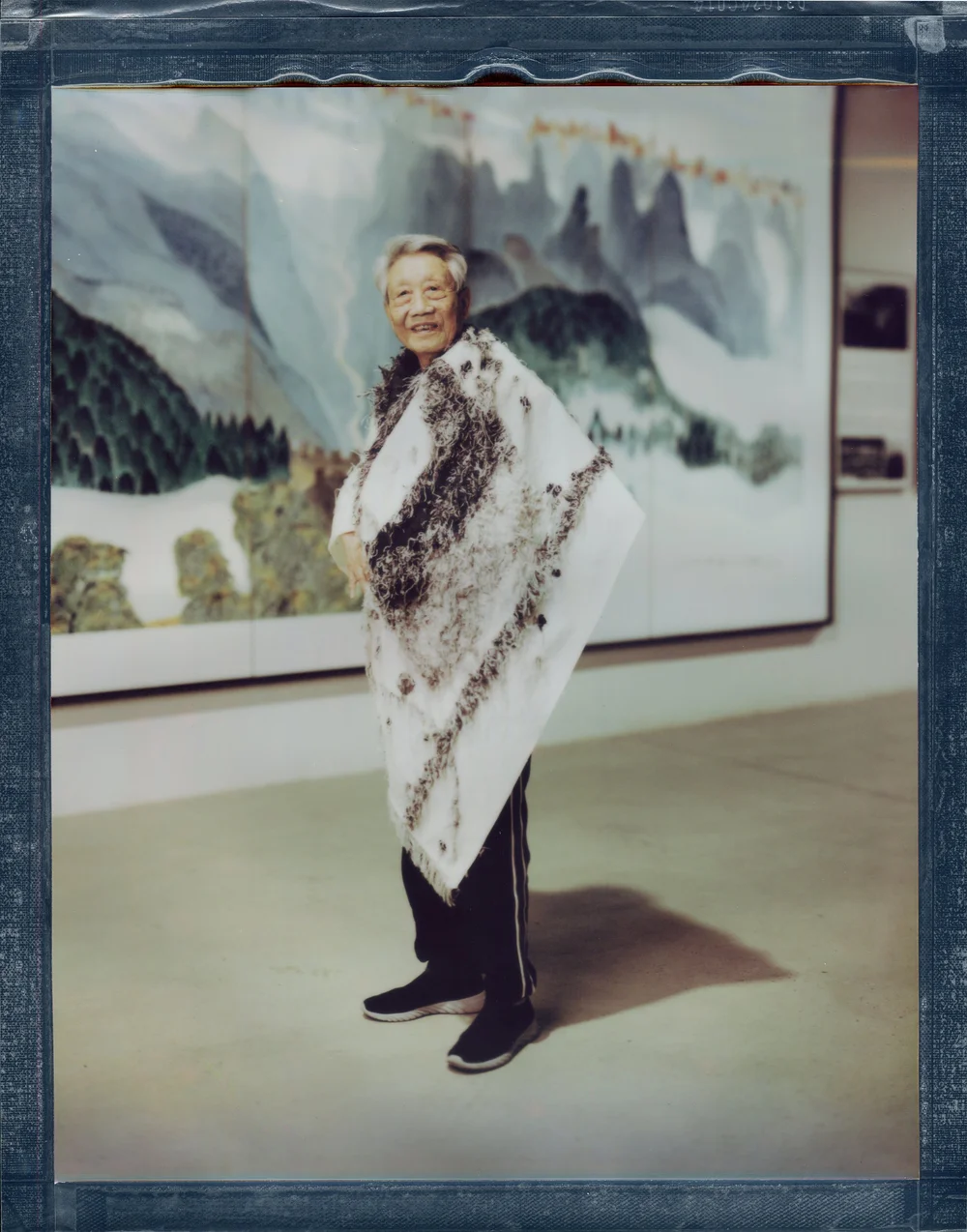
They are fragile! They might break!
Yeah, they might break. Just as delicate as the camera. In those cases, I’m leaning into the format itself as my mode of expression, because I feel that it lends a uniqueness to whatever you’re doing. If you’re taking a photo of this 95 year-old cherished artist, he’s never been shot like this before, you know, even if it’s even if it’s a resting expression portrait, it still has captured his soul in a way that’s unique in the modern day. The tools and myself go very hand in hand. We hold hands skipping down the beach.
When you were studying film and photography in school, are there photographers who are touchstones in your mind when you’re making art?
I don’t use photographers as a guide. Because my origins were more filmmaking-based, you know, I learned on Tarantino and Christopher Nolan and Stanley Kubrick and a lot of David Lynch, a lot of core filmmakers drove my early interest in making visual art. So when my photography branched from video, I didn’t necessarily gain new inspiration. A lot of what drove me originally and what I thought would become my main canvas was depicting cinematic scenes with photography. That was what I was originally interested in doing. And to a degree, I do find Route 66, mid-century America, very cinematic. When you just look at the film Paris, Texas, you can map some of my photos onto that film. You know, I love Stephen Shore as much as the next guy, but I don’t necessarily look at his images and think I gotta go get out there right now. I more look at my own images and think, oh, I gotta get out there right now and make something that is more true to me or is better than the last thing.
Do you have people that inspire you, now?
I would say, someone like Fred Johnson, who is a Polaroid guy, he makes these miniatures of himself and puts them into miniature scenes. And while that is completely different than the type of thing that I would do, I love the way he’s baking reality into unreality. That is something that I try at least once a month, as part of the 1212 project, because it’s an excuse to experiment. And so that, his style, the kinds of things he’s doing, it’s inspiring, especially through Polaroid, which adds this additional layer of almost confusion, when you’re looking at a scene that is real, but something is off a little bit, the chemistry is melting that all together.
I’m obsessed with Jamie Swick and her work. I find myself in nature very often as a result of being in these unusual places. And her work and her ability to create emotion out of a tree, or ind the color in something that I wouldn’t normally look closely at, she encourages me to be much more observant.
Honestly, and this is aspirational, but Walter Iooss. He’s one of the greatest sports photographers of all times and he’s taken some of the most unbelievable images of athletes that I’ve ever seen. He’s a constant inspiration to me. Ironically, I work with athletes almost every day, shooting video, but the photo element only comes in now and again. And so that’s sort of an aspirational one where I look at him and it pushes me to want to go out and do that. And figure out, how am I gonna do that? That’s something I want to do more of going forward, because it really is the marriage of my two biggest interests.
How has your YouTube project, In An Instant, influenced your photography?
I don’t think it has had a direct impact on the images that I make. More it’s given me the opportunity to explore what goes into the images with much more depth, and has given me a layer of consciousness that I didn’t have before, where every time I publish something, I’m thinking about the layers of it, how it’s perceived, how I created it, what tools were used to make it, what I meant to do when I made it. It gets me excited to make work, it’s another motivator, because it’s like, all right, we’re making a video about the SX-70 right now. I have a thousand photos I’ve taken with it in the past, but I’d rather go out right now and take a thousand more. Right now I’m testing a new SX-70 modification. I’ve used the SX-70 a thousand times, but it’s making me very stoked to go out the door and go find something. In An Instant gives me these excuses to do that with my everyday life. And as a freelancer, thankfully, I have pockets of time to explore that.
What’s your favorite photo that you’ve taken?
I mean, the Manhattan skyline photo is an interesting one because it does feel so fundamental to me. It feels like a bio photo or like if I died, they would show it. Alongside that, I also have a couple of 8×10 images of my grandfather that are particularly special. He was an artist, he was a hand illustrator, he was an actor, and I was following all these levels of his life when I was growing up, and then to end up…he’s 93 years old. I’m taking his 8×10 right now. That just felt like sort of this natural photo that had to be made, and so to have done that with him was really special, and so that photo is particularly core to me.
There’s another recent one, which was just my wife’s house at Christmas time, doing a long exposure of the family with the tree. Again, it felt like a personal memory that I’m going to look back on in 50 years and be able to just be standing right there. The camera and that process helps me ground myself in those moments and helps me place myself in time, as well. I’m really overactive and I really do so much. Everything can start blurring together, but when I look at one of those images I’m like, okay, I remember what it smelled like, I remember what my feet felt like standing there, so those three I think immediately come to mind. They also happen to be directly in front of me.
Top three photos I can see. What is it about the 8×10 versus, you know, a regular Polaroid, you know, or a 4×5?
I think the 8×10 is, first of all, it’s a more unique and true replication of a person or a place because of the field of view and because of what the lensing is doing. It’s a more natural POV than light coming through a cone and then going into a very small place. It’s giving you this more natural scale replica of reality, which in the end I think is one of the core things that I’m after. And then there’s also this intimacy that happens when you’re shooting either a person or a place. The amount of time you’re standing there and considering things and making the tiniest little movements and changes of focus.

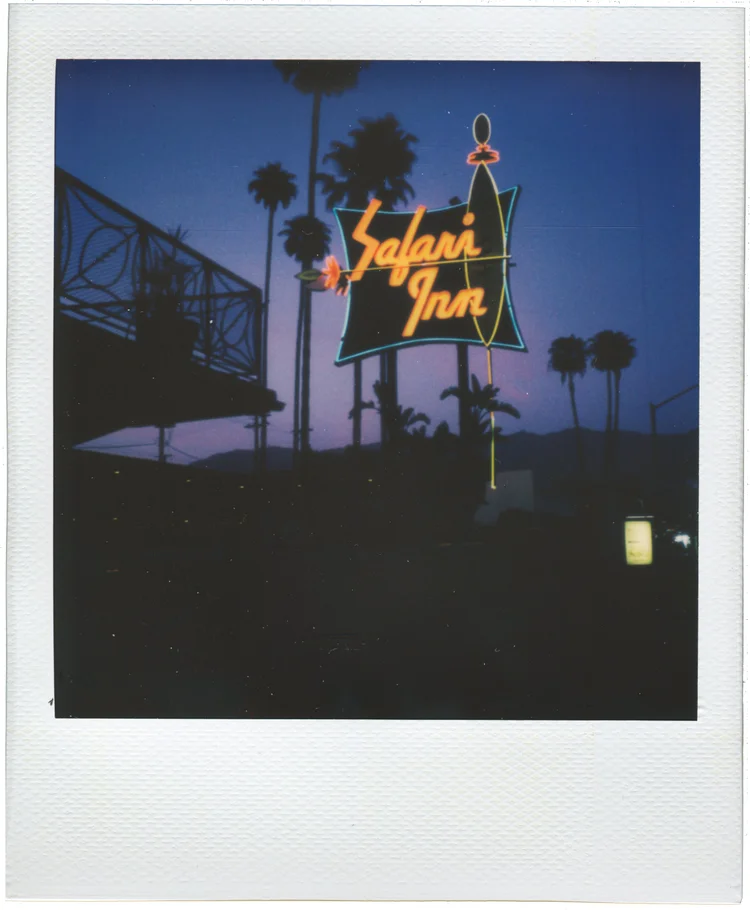
Those all just make it a more interesting experience to me and I think the images are always reflective of that because you feel like you can’t blow it if you if you throw up an 8×10, like, it screws up your day and maybe even your life. So it puts this extra onus on the actual process of it that you get that feeling with a typical Polaroid picture because it is so special. But I think it’s different with 8×10 and it just hits different than when you’re holding a 4×5. It’s still this small thing. With the 8×10 the fact that you can hold it and you’re just like, bam, that is in your face.
It’s such a special experience, especially when you’re doing it with someone else. You get this core moment where you’re both looking at this object and you’re just like. “wow, how is this even possible?” Those moments are so hard to come by. We’re in this ridiculous time and actually having a moment of genuine “whoa”. I’m always chasing that.
When you are photographing someone, is it helpful having that laborious process? How does that affect what you’re going for with a portrait?
As someone with the cinematography background, the feeling of setting up the lights carefully orchestrating the environment that you’re in, you’re not necessarily just being like, “hey, can you stand there? Boom.” You’re organizing the environment, the light, and the person. It’s more romantic for everyone involved.
It helps bring whatever I’m trying to bring out of that person because they feel like they’re in a movie almost, they feel like they’re in the 1800s with this gigantic camera and they want to be involved and give you something that you haven’t gone before. It can be hard to make someone feel comfortable in that circumstance. I’ve definitely encountered people who are like, “I’m like standing still for a minute. I can’t do this.” That’s part of the challenge of it. But when it works, there just isn’t a feeling like it. I’m always trying to chase that.
Do you have a sense of what it is you want from a subject when you’re trying to take a portrait?
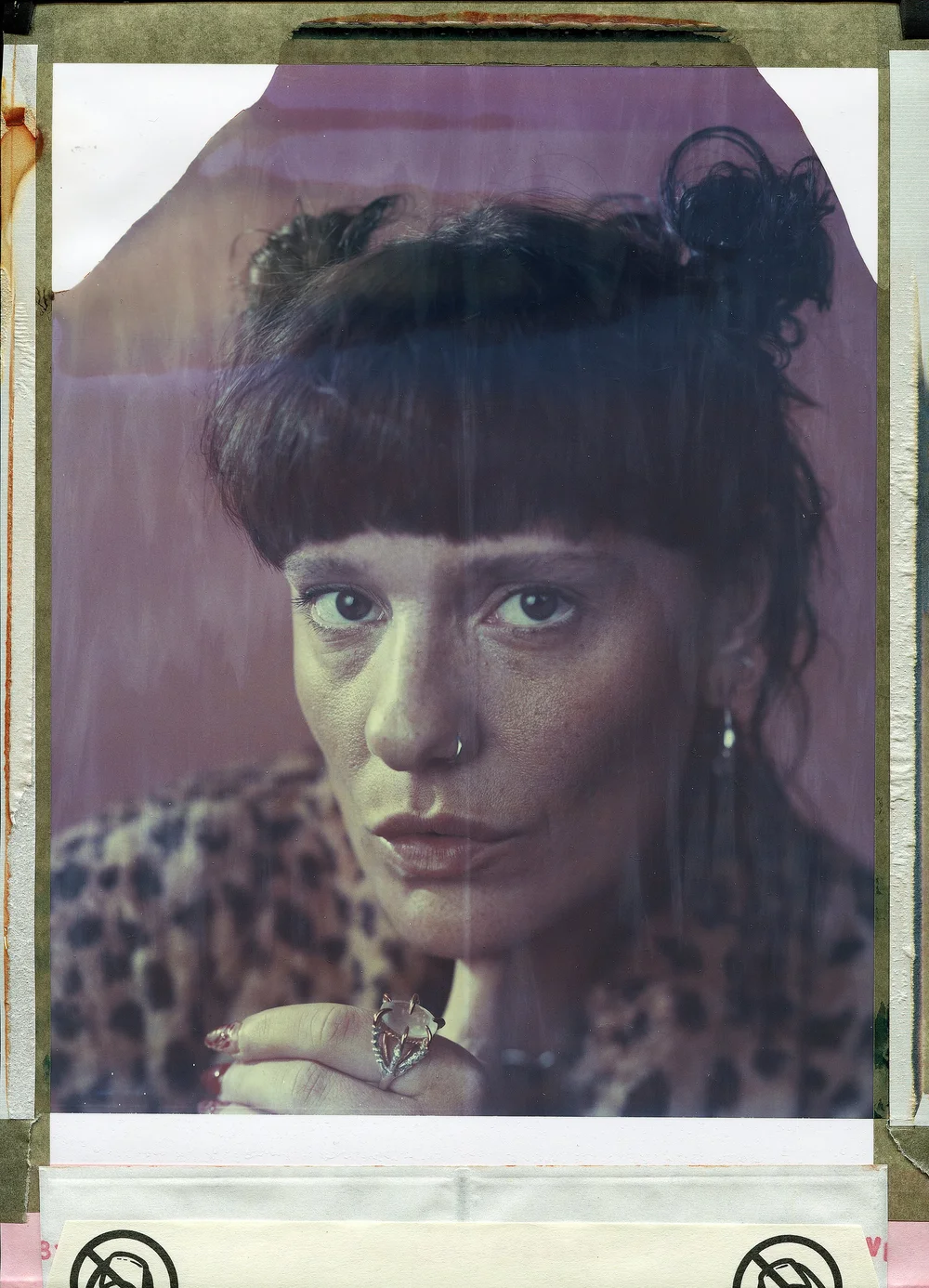
Yeah, I’m just trying to bring out the core beauty of somebody, show them in…I want to take the funeral photo. I want to take the beautiful, stately picture of somebody on this large format that represents them like no other and give them an art object of themselves. I think that’s what I’m looking for more than, “oh, she’s really happy. She should be smiling.” I am trying to bring something out of someone that might not necessarily be the most basic thing. Subtly and with light and with lens and with their eyes and all of those elements.
Now, what do you have planned for the future?
Well I’ve gotten into the Chinese market.
“I work for the Chinese government now.”
It’s becoming a bit of a thing! I’m going to be exploring China more next year. Now that I’ve built relationships that allow me access that I wouldn’t have had before. That’s exciting to me as an artist and as a modern man. Being able to turn over pages that have been stuck together for 70 years and being able to actually see something genuinely fresh and new and experience that with someone and photograph them, that’s a cocktail for me. So that is something I want to do going forward.

In terms of the video/photo combined element, I think I’m transitioning into a slightly more docu-style in general, whether that’s what I’m trying to depict on my YouTube channel or the photos that I’m taking alongside that. I’m finding myself doing street photography a little more. I’m finding myself taking documents of a place that aren’t as orchestrated by myself by time of day and light and waiting for the right moment. Sometimes the moment itself is enough and that is sort of what I’m transitioning into.
But yeah, going more into docu-stuff, exploring China, going to other countries and becoming more globally-minded, my last 8 years have been really America focused. Honestly, my last 15 years. Honestly, my whole life. My last 33 years. Honestly, my whole fucking life has been entrenched in the Americana aesthetic. And so expanding that and being more globally-focused in what I’m doing is really piquing my interest right now. I’m going to keep leaning into that.
The China trip was really transformative for you.
It really was. It really was. I mean, it’s one of those generic things to say, but it totally did change me and show me a different way. Not necessarily because they directly showed me something I should be doing, but just because I was thrown into this atmosphere that was much different than I’m used to and it forced me to adjust in ways that I ended up liking a lot.
The feeling of waking up in the morning and being like, “holy shit, what are we doing today? How are we going to do this today?” This is a photo/video super-challenge. I’m now lusting for that again. I recently went to Japan, did something similar, not as tortured as having to navigate the challenges I had to navigate in China. Them all being good, of course, but I did this in Japan. I believe I’m going to the Netherlands soon, headed to Scotland in the fall and who knows what else going forward, but I’m hoping to use those opportunities to do some more exploration-documentation and meet some people and take some crazy portraits.
Which do you prefer, the process or the result?
The result. I find that reflecting on images I’ve taken, it makes me happy. It makes me really happy. And I’ve always thought like, when that stops happening, I need to do something else. Because when I look at my own folder of images, I almost always have a freaking smile on my face. I’m living through my own life in this oddly linear way. Just through the process of taking photos every day and trying to capture whatever the keystone moment is of this day or this trip or this time. And I think the result is, it’s going through and experiencing these personal emotions, even if they never reach outside of myself. And ultimately, like I said, I’m self-competitive. I don’t care that much what someone thinks about my work or what I’m doing. I’m mostly just chasing that feeling of reflecting and thinking, “damn, I did it the way I wanted to do it. I’m very proud of that. It’s on my wall. I’m staring at it. I’m picking my favorite three photos on the wall.” That’s what I’m after.
That joie de vivre…
Yes, exactly. I started experiencing…well, I noticed a lack of it in when I was growing up. I was looking at our family photos, I was looking at the pictures we were making of ourselves as a family. Several people in my family are photographers and several of them stopped shooting once the digital transition happened. I noticed this broad gap that started to grow in the family photos. I don’t have any photos of myself from age 10 to 13 or whatever. It’s just bizarre. Once I started noticing that, I was like, “I need to start filling in these gaps.” And that has never left me, that feeling of needing to create some sort of chronology of life and have some sort of record of life. And a lot of that also stems from my continuous introspection growing up about our place in the universe.
It’s an interesting thought…you noticed that it wasn’t happening and that you felt that was bad.
Yeah, it was kind of horrifying. And it was kind of scary. There’s no record of…
What was scary about it?
It was scary to not have any record of existence and not have…I am very nostalgia-obsessed, and by that I mean, I like staring at something and feeling what it felt like to be there and think of all the elements that went into the moment and not being able to have access to any of that was scary because, you know, my memory is however good it is, but it’s, it’s not as good as a picture and it’s not as good as being able to travel through a picture into your mind palace and place yourself in that moment. And I was scared by the lack of any record of any of it.
What is it that draws you to that feeling of nostalgia?
I think about this all the time. That phrase, “nostalgia is a drug,” I actually feel like a chemical thing when I’m going through time in my mind. And I’ve always been chasing that feeling. It’s like, I’m trying to actually put it into words. It’s hard to put into words. But I remember when my Aunt Kibbe was dying, she was like 99 years-old, and I was thinking, “this is going to be inaccessible in my mind, this space, this time, if I don’t do something about it.”
Or when I was moving out of college and I was thinking, “this apartment is insane, it’s a piece of shit. But if I don’t do something about that and start filming it or take photos of it, then I’ll have no way to reflect back on this.” And I do honestly think it has to do with this thought I had growing up of, “what is our place in the world? What is the impermanence of humanity? We are so irrelevant in the grand scheme of things, so we have to create some sort of trail for ourselves. Otherwise, none of this matters.” And I do think that that has very much..that’s just in my blood. Nostalgia is connected to that. Being able to access the past, knowing that it’s gone, is a superpower.
I mean, to you, it feels like if you don’t record it, you’ll lose it.
Yeah, 100%. 100%, I do feel like it’s lost. And I don’t trust my own memory to have the detailed… I don’t trust my own memory and I don’t trust my own process of being alive to be able to encase life itself without that. And now I don’t fear it anymore because I obsessively do it. But I think when you see people shooting endlessly on iPhones or photos going to cloud storage, I think almost the same thing is happening. Yes, you can sit there and scroll through your phone, but you will lose that. That will go away. Whether or not that’s now or in 200 years, no one’s going to open up a cardboard box and find your old clothes and your phone in there and wake up your cloud library. It’s just not going to happen. And so making these physical objects, especially through Polaroid, is that immediate moment of creation and installation and piece of nostalgia you can hold forever until it fades away. But, you know, everything will fade away eventually.
I mean…you just fear death. Let’s just get it out there!
Well yeah! What’s funny is, I didn’t fear death growing up. I was very emboldened for some reason. I was very aware of death and that it was going to come and I think it’s not necessarily fear of dying, it’s a fear of dying and nothing’s there when you’re dead, oblivion, there’s no Ben anymore after he dies, but there may be this register of his life that, if someone bothers to, they can go through and access it.
And I think that is weirdly intangible for many people, and I am creating something tangible so that it doesn’t happen to me.
It’s not death, it’s being forgotten. It’s that if you’re not remembered, it doesn’t matter.
Yeah, if you’re not remembered and if there’s no trail, if there’s no trace, that is scary to me. I think that this all ties into the stuff that I like shooting, because when I’m out on Route 66 or I’m out in the middle of America and I’m out in these random places that even the most well-drawn collector of old sites has seen, I do feel like the Polaroid and this process is doing that thing. It’s taking the world that is disappearing and is constantly changing and that we’ll have no trace of and it’s making a physical thing of it.
And same with a portrait of a person. When I say I want to take the funeral photo, that’s what I’m talking about. Taking this image that is emblematic and can be looked back on and it leaves a trace and it leaves a record. And it’s a classical concept. It’s something that was basically started with the very first realistic paintings, but that is the kind of thing I’m after. It’s the encapsulation.