Essay 614 • Feb 16th 2026
- by Gustavo Gusmão
We see a São Paulo increasingly marked by immigration issues and parallel realities that inhabit our daily lives. For years, I have been trying to translate immigration and transitional spaces, whose characters, regardless of their origins, move, leaving traces of a collective memory in transformation, or ethnic symbolisms of a time that seems to have remained in the past. People whose objective often lies only in an indefinite destiny, conditioned by urban occupations, starting from their own personal exodus, on a pilgrimage for a better life.
Deep Colored in their origins, African immigrants occupy dozens of buildings in the largest metropolis in Latin America. In a place where transience is a permanent state, countless Black stories intersect in this zone of exclusion in the city center. These are abandoned buildings, forgotten by real estate capital and the government, and which are now filled with those who, otherwise, would have nowhere to settle.
Re-Tinto (deep-colored in Portuguese) is the undeniable presence of those who inhabit the border of exclusion, the thin line between existence and oblivion. It is the color that imposes itself, that does not dilute. The shadows of a diaspora in eternal evidence, of a history that cannot be removed, forgotten, or deported. A testament to the permanence of a people marked by repetitions and the erasure of their own history, under the walls of a city that repeats cycles of exclusion.
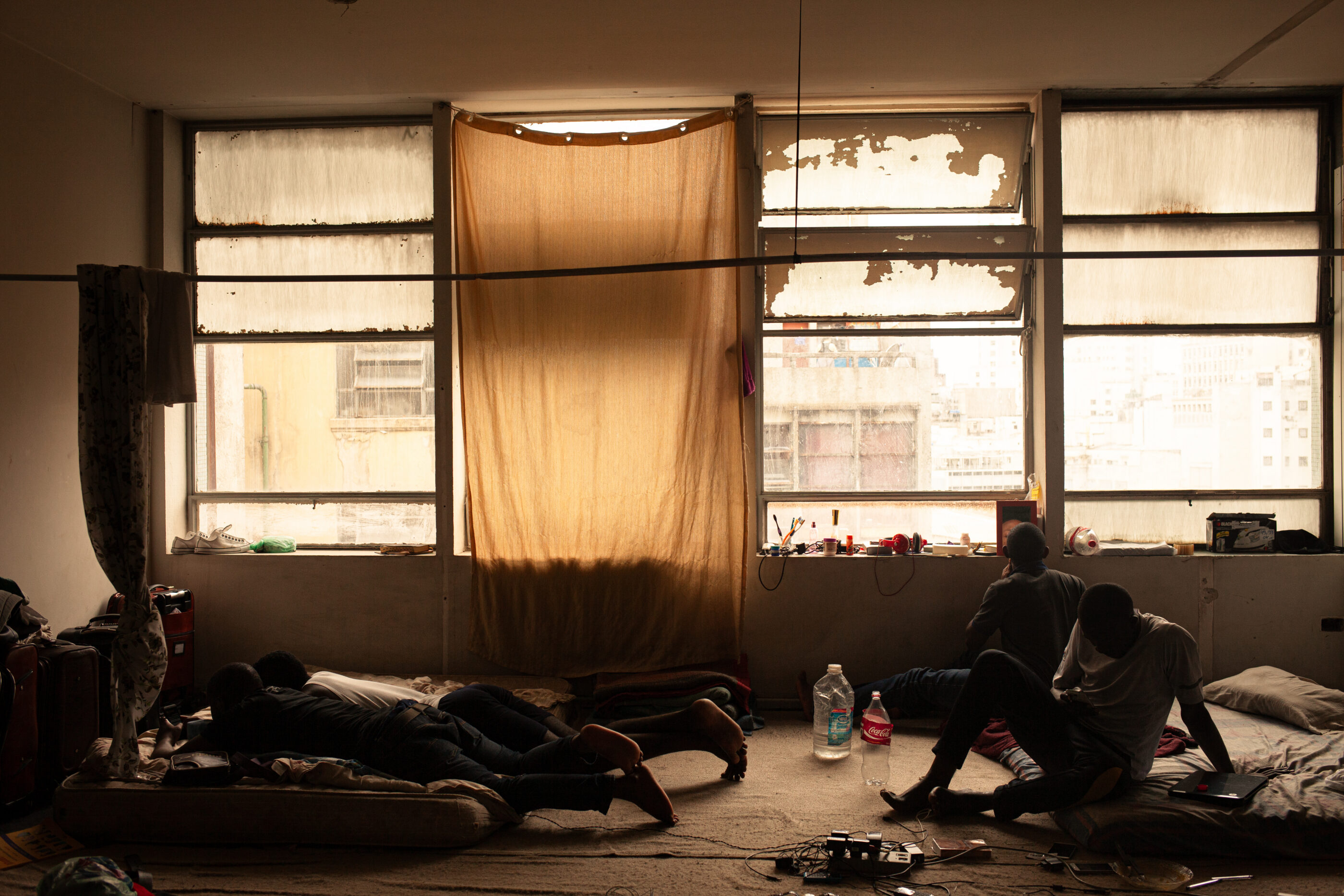


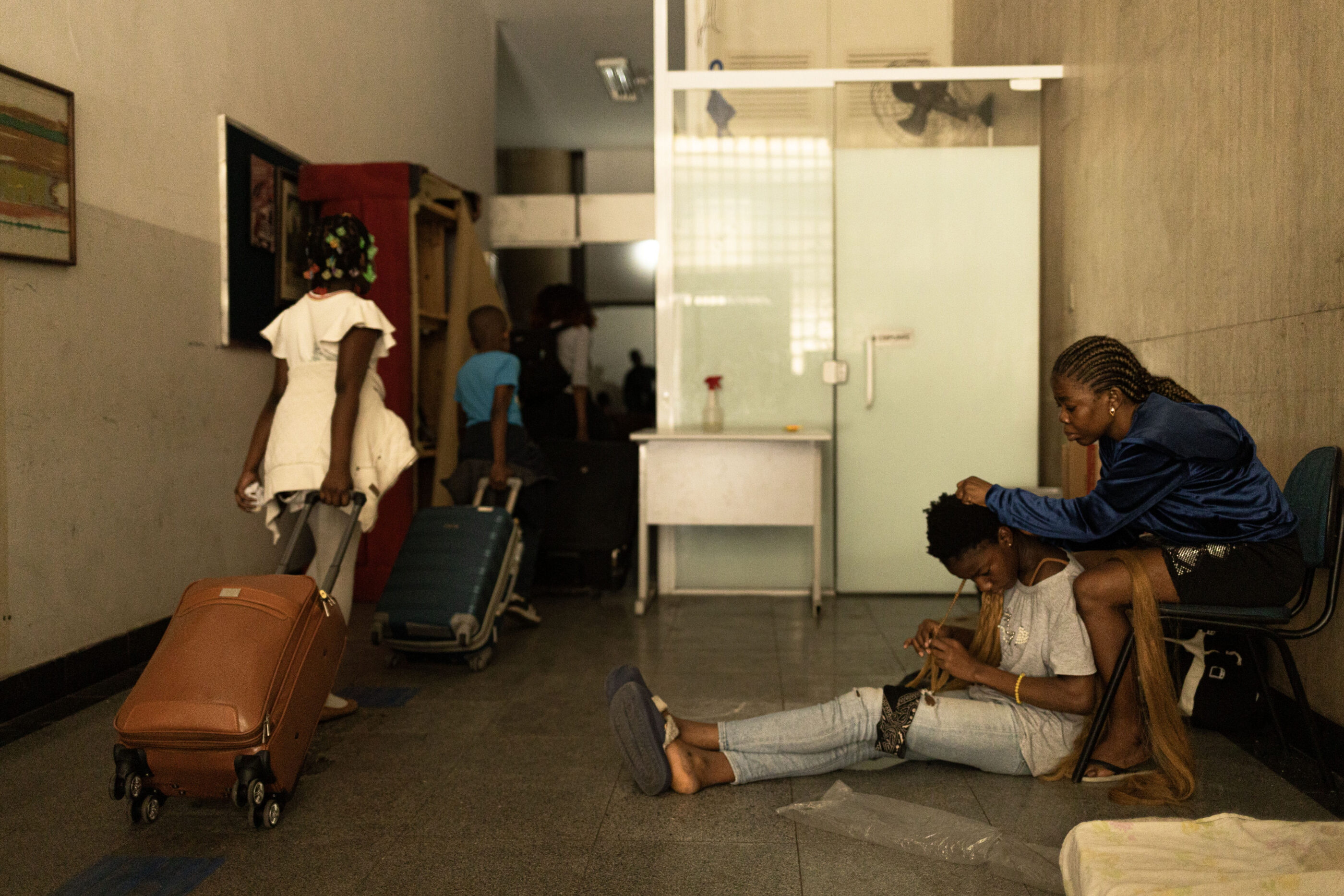


Gustavo Gusmão has directed his artistic work towards exploring themes related to marginalization and the relationship between individuals and the spaces they inhabit.
His exhibition “Limbus” (2019), held at MIS-SP, is a notable example, focusing on communities living in cemeteries in Manila, Philippines, and exposing their invisibility and the precariousness of their existence. This earlier work demonstrates an interest in giving visibility to marginalized social groups, using photography as a tool to document and provoke reflection on their living conditions. His background in documentary filmmaking, with a master’s degree in the field, likely significantly influences his photographic approach, suggesting a focus on narrative and capturing authentic experiences. The Power of Visual Narrative in Confronting Invisibility.
This same motivation seems to drive the 2 years of research, photos, visits, and documentation of the lives of African immigrants in occupied buildings in downtown São Paulo. The RE-Tinto project seeks to bring to light the experiences of African immigrants in São Paulo. Through his lens, Gusmão can offer a sensitive and attentive look at the daily lives of these people, revealing their struggles, their joys, their fears, and their pain in this place of impermanent transit. Photography, in this context, becomes a powerful tool to give voice to those who are often unheard, challenging invisibility and building bridges of understanding between different social groups.